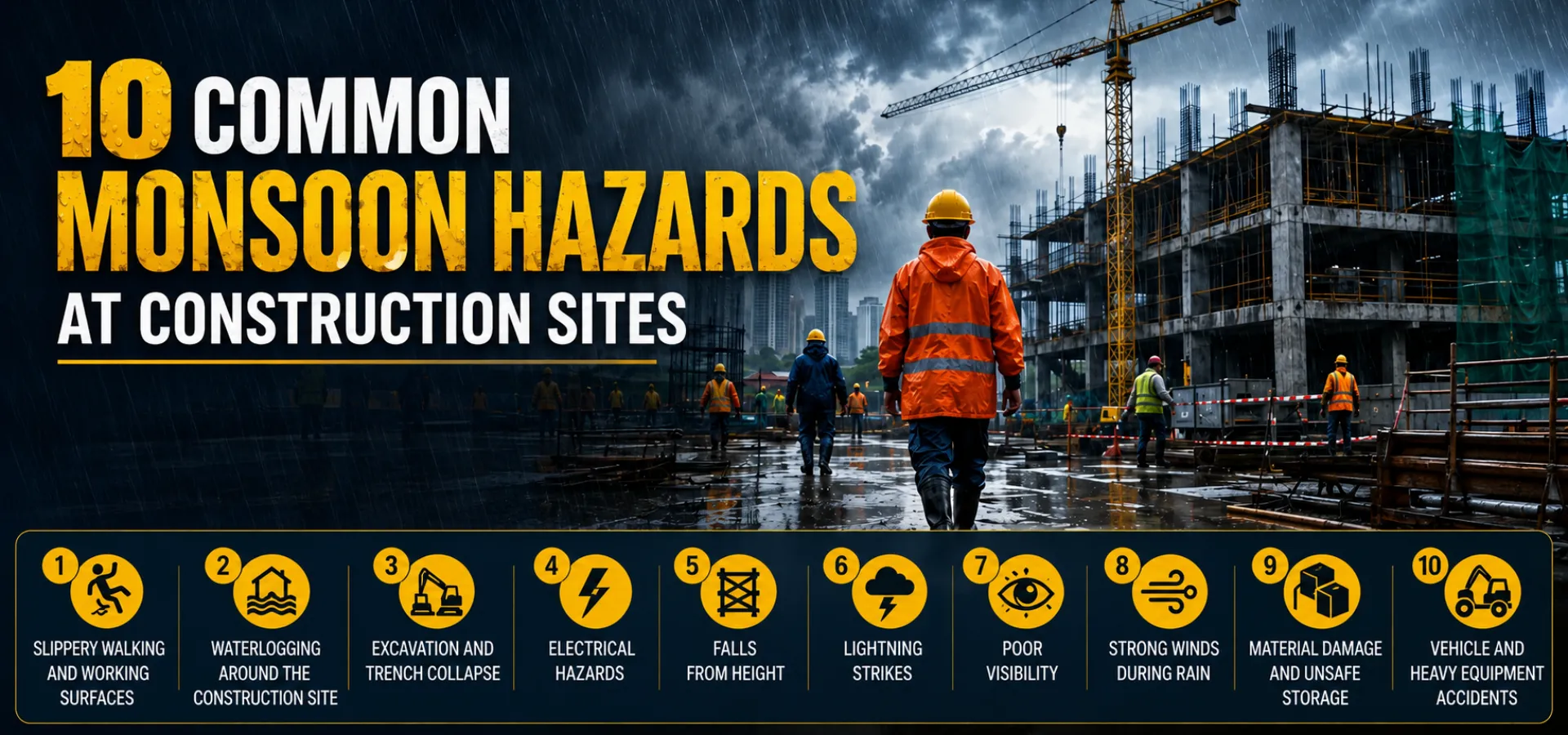
10 Common Monsoon Hazards at Construction Sites and How to Prevent Them
The monsoon season brings much-needed rainfall, but it also creates serious safety challenges for the construction industry. Heavy rain, waterlogging, slippery surfaces, strong winds, lightning and poor visibility can quickly turn a normal worksite into a high-risk environment. Even a well-managed construction site can become unsafe if rain-related hazards are not identified and controlled on time.
Understanding the monsoon hazards at construction sites is essential for every contractor, project manager, engineer, supervisor, safety officer and worker. Rain affects almost every construction activity, including excavation, scaffolding, electrical work, material handling, vehicle movement and lifting operations. Wet conditions reduce stability, weaken the ground, damage equipment and increase the chances of accidents. Without proper planning, even small hazards can lead to serious injuries, costly delays and damage to property.
Construction companies should not wait for an accident to improve safety. They should prepare before the rainy season begins by carrying out inspections, improving drainage, checking temporary structures and training workers on monsoon safety procedures. Regular monitoring of weather conditions and daily site inspections also play a major role in reducing risks.
A safe construction site during the monsoon is the result of good planning, regular inspections and quick action before hazards become accidents.
1. Slippery Walking and Working Surfaces
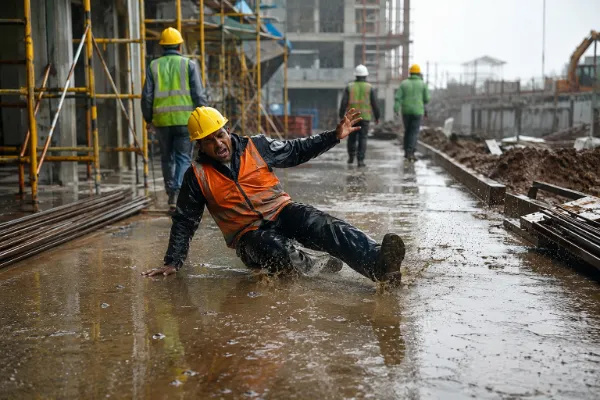
Rainwater makes construction sites slippery within minutes. Walkways, steel plates, scaffolding platforms, ladders, ramps and working areas often become wet and muddy during the monsoon. Workers carrying tools or materials may lose their balance while walking on these surfaces. Since construction sites remain busy throughout the day, even one slippery area can cause multiple accidents. Wet surfaces reduce the grip between footwear and the ground. Mud, oil, algae, cement slurry and loose debris make the situation even more dangerous. These conditions increase the likelihood of slips and falls, especially in areas with heavy worker movement.
How to prevent it
- Keep walkways clean and free from mud.
- Remove standing water immediately.
- Install anti-slip mats where needed.
- Provide slip-resistant safety shoes.
- Place warning signs in slippery areas.
- Inspect ladders and platforms before use.
Good housekeeping is one of the easiest and most effective ways to reduce monsoon hazards at construction sites.
2. Waterlogging Around the Construction Site
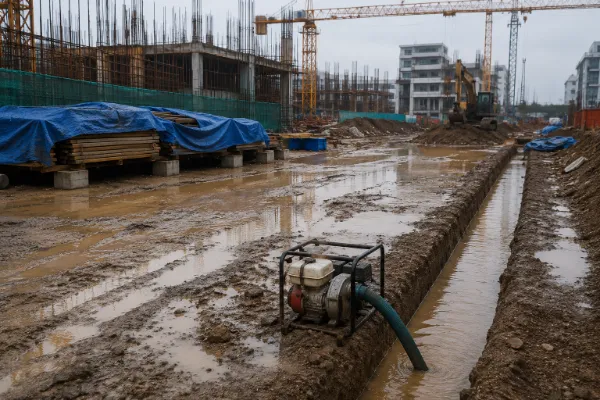
Heavy rainfall often causes water to collect around excavation areas, storage yards, access roads and work zones. Poor drainage systems make the problem worse by allowing water to remain on the site for long periods. Waterlogging not only interrupts work but also creates hidden dangers that workers may not notice immediately. Standing water can hide potholes, exposed reinforcement bars, electrical cables and uneven ground. It also weakens the soil and increases the risk of mosquitoes breeding around the workplace. Continuous water accumulation may damage construction materials and delay project activities.
How to prevent it
- Develop an effective drainage system.
- Install temporary drainage channels before the rainy season.
- Use pumps to remove accumulated water.
- Store materials on raised platforms.
- Inspect the site after every heavy rainfall.
Proper drainage planning improves both construction safety and project productivity during the monsoon season.
3. Excavation and Trench Collapse
Excavation work becomes much more dangerous during the rainy season. Rainwater weakens the soil and reduces its ability to support trench walls. Even a trench that appeared safe before rainfall can collapse without warning after heavy rain. Water increases the pressure on trench walls while reducing soil strength. Workers inside excavations may not notice signs of failure until it is too late. Heavy equipment operating near excavation edges adds extra pressure and increases the risk of collapse.
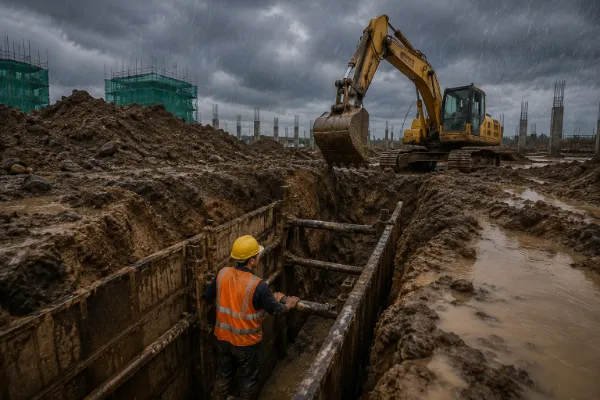
How to prevent it
- Stop excavation work during heavy rainfall.
- Inspect trenches before allowing worker entry.
- Install proper shoring or trench boxes.
- Keep heavy machinery away from trench edges.
- Remove rainwater before restarting work.
- Allow only competent persons to inspect excavations.
Excavation safety requires extra attention because soil conditions can change rapidly during the monsoon.
4. Electrical Hazards
Electricity and rain create one of the most dangerous combinations at any construction site. Temporary electrical installations, portable tools, extension cables and electrical panels become more vulnerable when exposed to water. Even a small amount of moisture can increase the risk of electric shock. Water increases electrical conductivity and allows current to travel through damaged cables, wet equipment and exposed wires. Workers using electrical tools with wet hands or standing on wet ground face a much greater risk of electrocution.
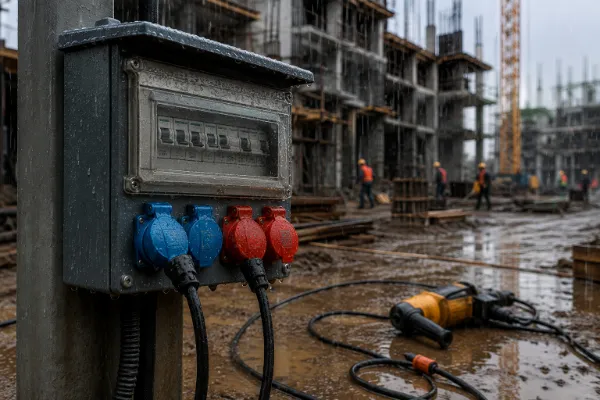
How to prevent it
- Keep electrical panels waterproof.
- Use weatherproof sockets and connectors.
- Install RCDs or ELCBs.
- Never operate electrical equipment with wet hands.
- Inspect cables every day.
- Disconnect power before repairs.
Frequent electrical inspections during the rainy season can save lives and prevent costly equipment damage.
5. Falls from Height
Working at height is already one of the highest-risk activities in construction. During the monsoon, the danger increases because rainwater makes scaffolding, roofs, ladders and platforms slippery. Strong winds and poor visibility make it even harder for workers to maintain balance. Workers may lose their footing while climbing ladders or walking on wet platforms. Strong winds can affect balance, while rain reduces visibility and makes it difficult to identify hazards. These conditions significantly increase the chances of serious falls.
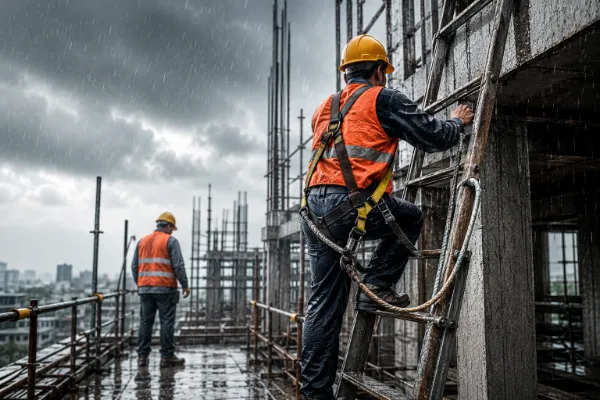
How to prevent it
- Stop work at height during heavy rain.
- Inspect scaffolding every day.
- Install guardrails and toe boards.
- Use full-body harnesses with secure anchor points.
- Remove water from work platforms.
- Maintain three-point contact while climbing ladders.
No construction deadline is more important than protecting workers from falls during the monsoon.
6. Lightning Strikes
Construction sites are often open areas with cranes, tower cranes, steel structures, reinforcement bars, scaffolding and other tall metal objects. During the monsoon, thunderstorms become more frequent, making lightning one of the most dangerous monsoon hazards at construction sites. Workers who continue outdoor activities during a thunderstorm face a serious risk of injury or death. Lightning can strike without much warning and travel through metal structures, electrical systems and wet surfaces. Workers operating cranes, working on rooftops or handling long metal materials are at greater risk. Ignoring weather warnings can lead to severe accidents that affect both workers and equipment.
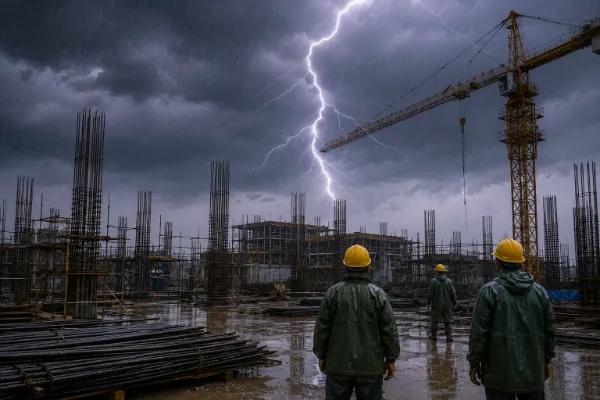
How to prevent it
- Monitor weather forecasts regularly.
- Stop outdoor work during thunderstorms.
- Move workers to safe shelters immediately.
- Install lightning protection systems where required.
- Keep workers away from cranes, towers and isolated trees.
No construction activity should continue when lightning threatens the safety of workers.
7. Poor Visibility
Heavy rainfall, dark clouds, fog and mist often reduce visibility across construction sites. Workers may find it difficult to see moving vehicles, machinery, warning signs or nearby hazards. Poor visibility affects communication between workers and equipment operators, increasing the possibility of accidents. Limited visibility also makes lifting operations, excavation work and vehicle movement more dangerous. Workers may unknowingly enter restricted areas or fail to notice suspended loads. Supervisors should treat reduced visibility as a serious safety concern rather than a minor inconvenience.
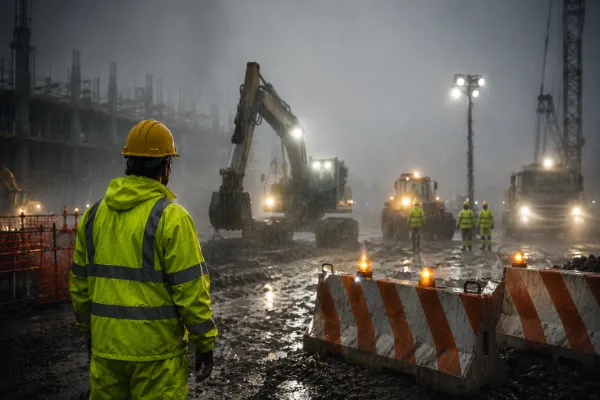
How to prevent it
- Install temporary lighting where required.
- Provide reflective safety jackets to workers.
- Place reflective barricades around hazardous areas.
- Reduce vehicle speed across the site.
- Stop lifting operations when visibility becomes unsafe.
Good visibility helps workers identify hazards before they become accidents.
8. Strong Winds During Rain
The monsoon season does not bring rain alone. Sudden strong winds often accompany heavy showers and create additional risks at construction sites. Temporary structures, scaffolding, cranes, hoardings and loose materials may become unstable if they are not properly secured. Strong winds can affect lifting operations, reduce the stability of scaffolding and cause lightweight materials to become airborne. Flying objects can strike workers, damage equipment or create dangerous conditions across the worksite. Supervisors should continuously monitor weather conditions and stop high-risk activities whenever wind speeds become unsafe.
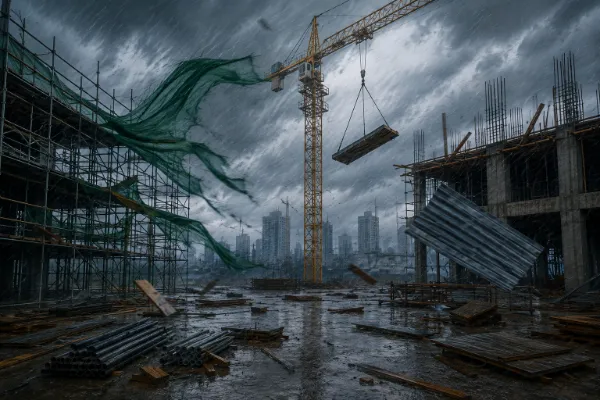
How to prevent it
- Secure loose materials properly.
- Inspect scaffolding connections regularly.
- Stop crane operations during high winds.
- Strengthen temporary structures before the monsoon.
- Remove unnecessary materials from elevated platforms.
Weather monitoring helps site supervisors make timely decisions that protect both workers and equipment
9. Material Damage and Unsafe Storage
Construction materials often remain stored in open areas for easy access. During the monsoon, continuous exposure to rain and moisture can damage these materials and reduce their quality. Poor storage practices not only increase financial losses but also create safety risks if weakened materials are used in construction. Moisture can affect cement, steel, timber, insulation materials, chemicals and electrical components. Damaged materials may fail during use, resulting in structural defects or unsafe working conditions. Proper storage is therefore an important part of managing monsoon hazards at construction sites.
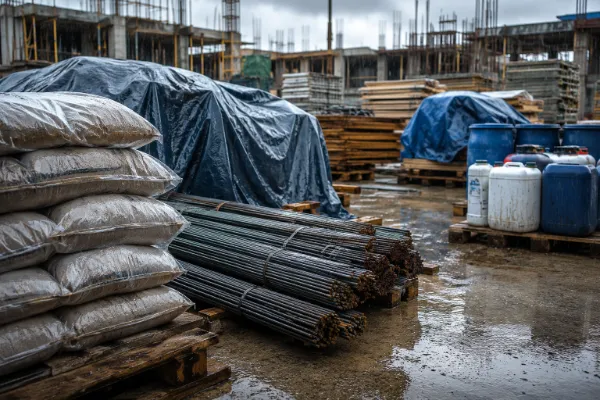
How to prevent it
- Store cement in dry covered areas.
- Keep materials on raised pallets.
- Cover steel and equipment with waterproof sheets.
- Store chemicals in ventilated storage rooms.
- Inspect stored materials after heavy rainfall.
Protecting construction materials protects both worker safety and the overall quality of the project.
10. Vehicle and Heavy Equipment Accidents
Rain changes road conditions throughout the construction site. Mud, standing water, soft ground and slippery access roads make it difficult for drivers to control heavy equipment and construction vehicles. Reduced visibility further increases the chances of collisions and overturning incidents. Heavy machinery such as excavators, dump trucks, loaders and cranes require stable ground for safe operation. Wet soil may not support the weight of equipment, increasing the risk of sinking, skidding or tipping over. Safe driving practices and regular inspections become even more important during the rainy season.
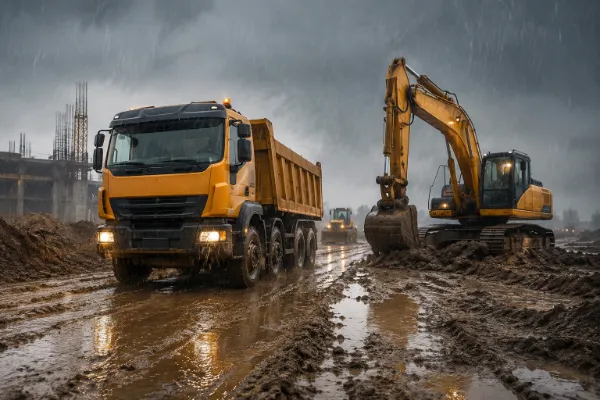
How to prevent it
- Maintain proper site roads.
- Reduce vehicle speed during rainfall.
- Inspect brakes, tyres and lights daily.
- Use trained signalers during vehicle movement.
- Restrict unnecessary vehicle movement during severe weather.
- Improve drainage around equipment operating areas.
Safe vehicle movement is essential for reducing accidents and maintaining smooth construction activities during the monsoon.
Monsoon Safety Videos
Conclusion
The monsoon season creates many challenges for the construction industry, but most accidents can be prevented through proper planning and effective safety management. Understanding the monsoon hazards at construction sites helps organizations identify risks before they lead to injuries, equipment damage or costly project delays. Regular inspections, good housekeeping, proper drainage, electrical safety, safe work at height, weather monitoring and worker training all contribute to a safer workplace.
A safe monsoon season begins with preparation, continues through daily inspections and succeeds when every worker follows safe work practices.