
Environmental, Health and Safety (EHS) compliance is an essential part of running a safe, responsible and efficient business. Organizations across industries must follow applicable safety regulations, environmental standards and workplace health requirements to protect employees, minimize environmental risks and maintain smooth operations.
However, even businesses with established safety programs can make mistakes that lead to workplace accidents, regulatory penalties, environmental incidents and unnecessary operational costs.
Many EHS compliance problems do not happen because organizations completely ignore safety. Instead, they often result from outdated procedures, insufficient employee training, poor documentation or a lack of regular monitoring. Understanding these common mistakes is the first step toward building a stronger EHS management system.
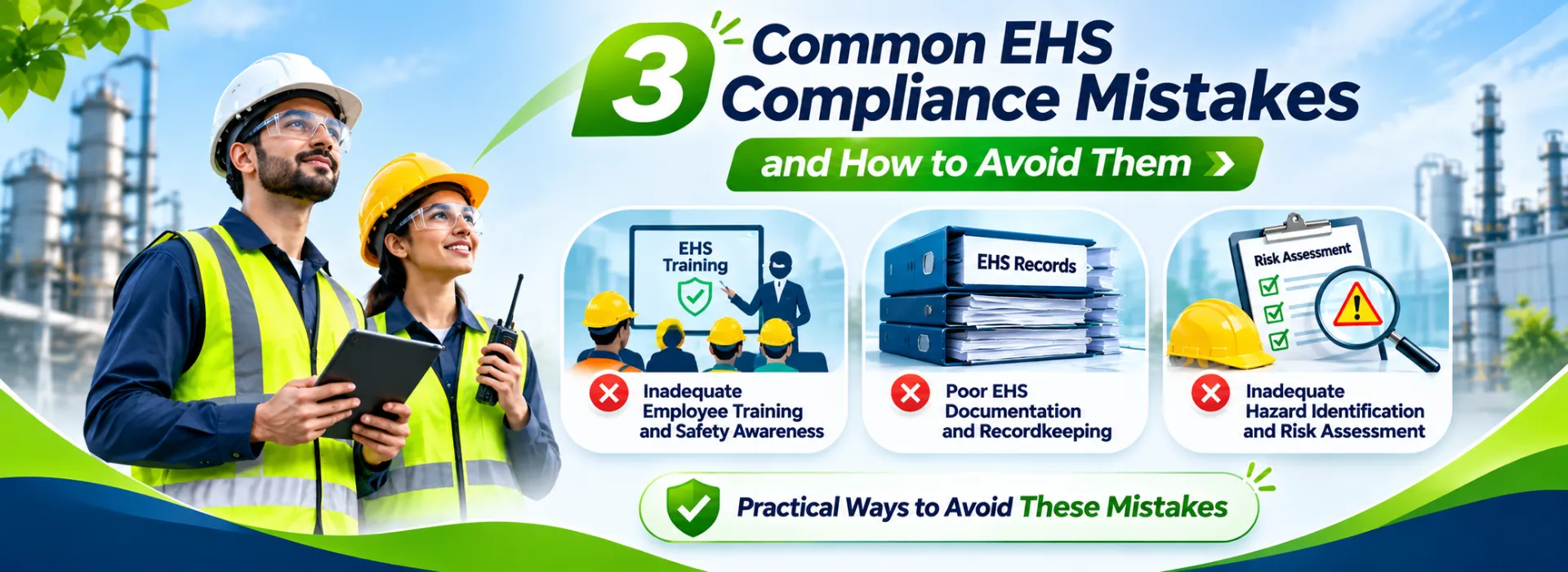
In this article, we will explore three common EHS compliance mistakes, explain why they occur and discuss practical ways businesses can avoid them.
1. Inadequate Employee Training and Safety Awareness
One of the most common EHS compliance mistakes is failing to provide employees with adequate safety training. Workplace safety policies are only effective when employees understand them and know how to apply them in their daily activities.
Some organizations provide training only during employee onboarding and fail to offer regular refresher sessions. Others assume that experienced workers already understand all relevant safety procedures.
Unfortunately, workplace hazards can change over time. New equipment, updated processes, different materials and revised regulations may introduce risks that employees are not prepared to handle.
Without appropriate training, workers may misuse equipment, overlook hazards, mishandle chemicals or fail to respond correctly during emergencies.
Why Is This a Problem?
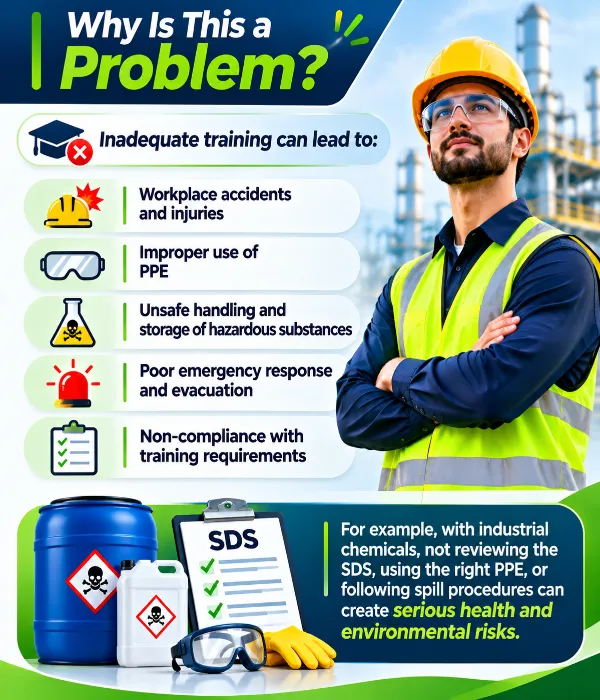
Inadequate training can contribute to:
- Increased workplace accidents and injuries.
- Improper use of personal protective equipment (PPE).
- Unsafe handling and storage of hazardous substances.
- Poor emergency response and evacuation procedures.
- Failure to meet applicable training and competency requirements.
For example, an employee working with industrial chemicals may not understand the importance of reviewing a Safety Data Sheet (SDS), wearing the correct protective equipment or following the required spill response procedure. This knowledge gap can create serious health and environmental risks.
How to Avoid This Mistake
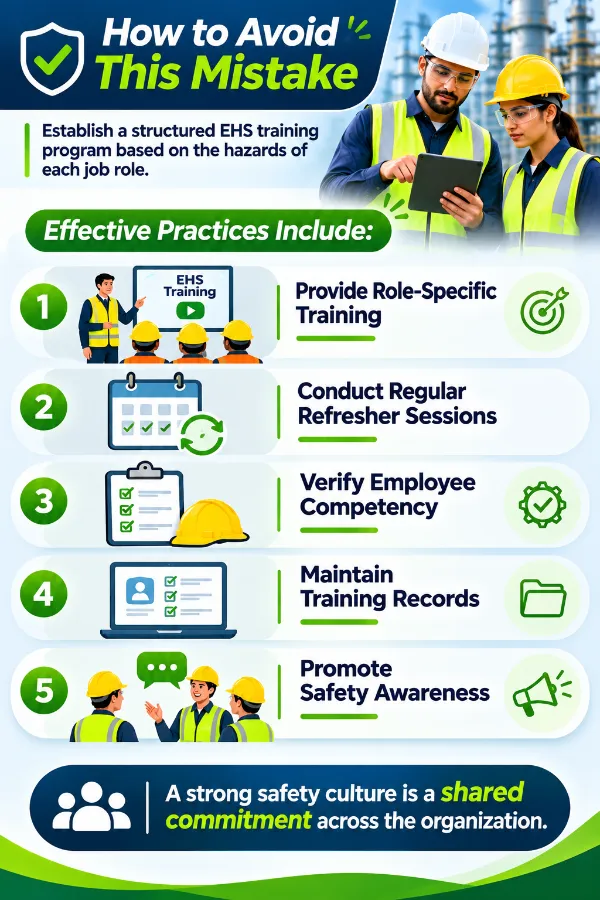
Businesses should establish a structured EHS training program that reflects the hazards associated with each job role.
Effective practices include:
- Provide role-specific training: Ensure employees receive training relevant to their tasks, equipment and exposure risks.
- Conduct regular refresher sessions: Reinforce important safety practices and communicate changes in procedures.
- Verify employee competency: Use demonstrations, assessments or practical exercises to confirm that workers understand the training.
- Maintain training records: Document attendance, training topics, completion dates and competency assessments where required.
- Promote safety awareness: Encourage employees to report hazards, ask questions and participate in safety discussions.
A strong safety culture begins when employees understand that EHS compliance is not just a management responsibility but a shared commitment across the organization.
How SheelPlatform Can Help Improve EHS Training Management
Managing employee safety training becomes more challenging as organizations grow and workplace requirements change. Businesses need a structured way to connect safety knowledge, training activities and compliance workflows.
SheelPlatform brings EHS learning, safety operations, and compliance-related workflows together in one connected platform. Its learning management capabilities include courses, quizzes, certificates and training progress management, helping organizations organize their learning activities more effectively.
By connecting training with broader EHS operations, organizations can work toward better visibility, stronger safety awareness and more consistent management of workplace training requirements.
Learn more about SheelPlatform and explore how connected EHS workflows can support your safety management goals.
2. Poor EHS Documentation and Recordkeeping
Another frequent EHS compliance mistake is maintaining incomplete, inaccurate or outdated safety documentation.
EHS programs rely on accurate records to demonstrate that safety procedures are implemented, risks are assessed, inspections are completed and employees receive the required training.
However, some organizations manage their documentation through scattered spreadsheets, paper files, outdated templates or disconnected systems. This can make it difficult to identify missing records and retrieve information during an internal audit or regulatory inspection.
Important documents may include risk assessments, incident reports, inspection checklists, environmental monitoring results, chemical inventories, training records, emergency plans and corrective action reports.
The specific documentation requirements depend on the industry, location, applicable regulations and the organization’s activities.
Why Is This a Problem?
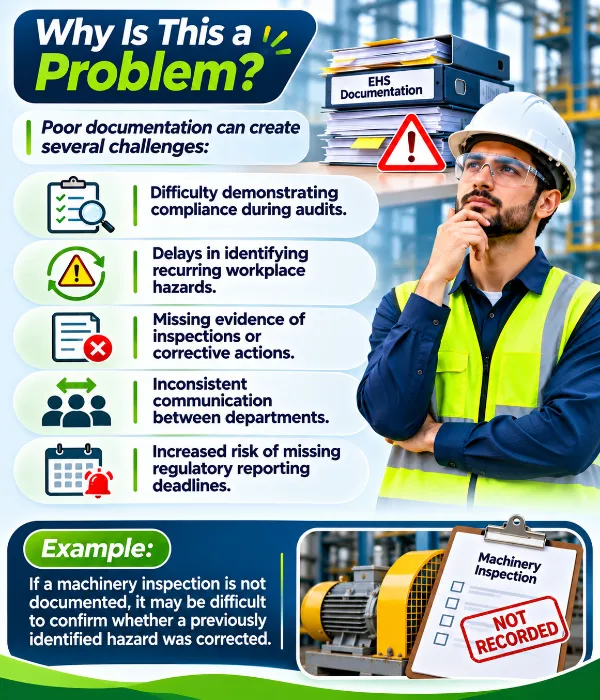
Poor documentation can create several challenges:
- Difficulty demonstrating compliance during audits.
- Delays in identifying recurring workplace hazards.
- Missing evidence of inspections or corrective actions.
- Inconsistent communication between departments.
- Increased risk of missing regulatory reporting deadlines.
For instance, if a company fails to document the findings of a machinery inspection, it may be difficult to determine whether a previously identified hazard was corrected. This weakens accountability and makes it harder to prevent similar incidents.
How to Avoid This Mistake
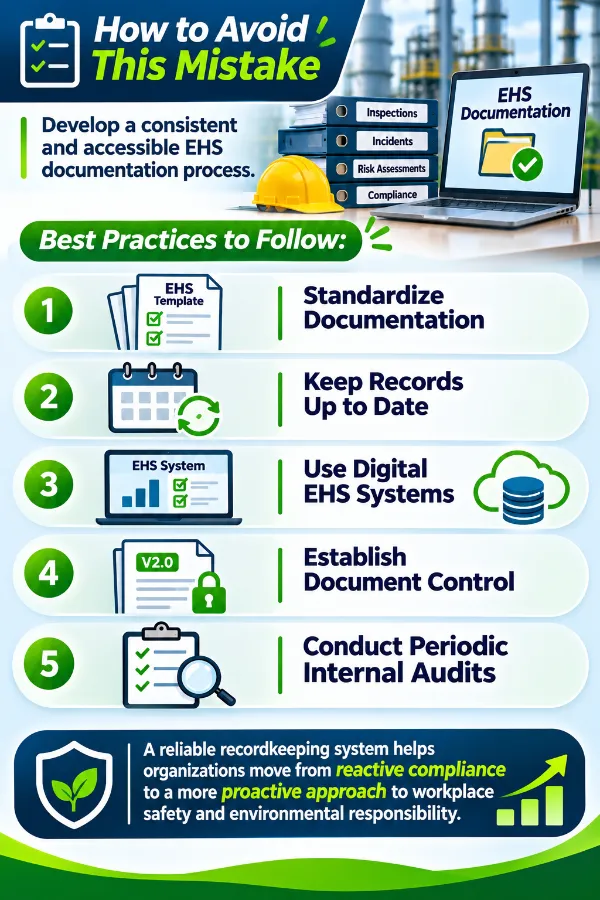
Organizations should develop a consistent and accessible EHS documentation process.
Consider the following best practices:
- Standardize documentation: Use approved templates for inspections, incident investigations, risk assessments and other key records.
- Keep records up to date: Assign responsibility for reviewing and updating documents at defined intervals and whenever significant changes occur.
- Use digital EHS systems where appropriate: Centralized software can help organize records, track deadlines and improve visibility into compliance activities.
- Establish document control: Maintain version numbers, approval details, review dates and access permissions where appropriate.
- Conduct periodic internal audits: Check whether required records are complete, accurate, accessible and retained for the appropriate period.
A reliable recordkeeping system helps organizations move from reactive compliance management to a more proactive approach to workplace safety and environmental responsibility.
How SheelPlatform Can Help Improve EHS Training Management
Managing employee safety training becomes more challenging as organizations grow and workplace requirements change. Businesses need a structured way to connect safety knowledge, training activities and compliance workflows.
SheelPlatform brings EHS learning, safety operations, and compliance-related workflows together in one connected platform. Its learning management capabilities include courses, quizzes, certificates and training progress management, helping organizations organize their learning activities more effectively.
By connecting training with broader EHS operations, organizations can work toward better visibility, stronger safety awareness and more consistent management of workplace training requirements.
Learn more about SheelPlatform and explore how connected EHS workflows can support your safety management goals.
3. Failing to Conduct Regular Risk Assessments and Workplace Inspections
A third common EHS compliance mistake is treating risk assessments and workplace inspections as one-time activities rather than ongoing processes.
Workplace conditions can change as equipment is modified, production increases, new chemicals are introduced or employees adopt different working methods. A risk assessment that was appropriate several months ago may no longer reflect current conditions.
Similarly, inspections that focus only on completing checklists may overlook underlying hazards if findings are not investigated and corrective actions are not followed through.
Without regular hazard identification and risk evaluation organizations may fail to recognize unsafe conditions before they lead to an incident.
Why Is This a Problem?
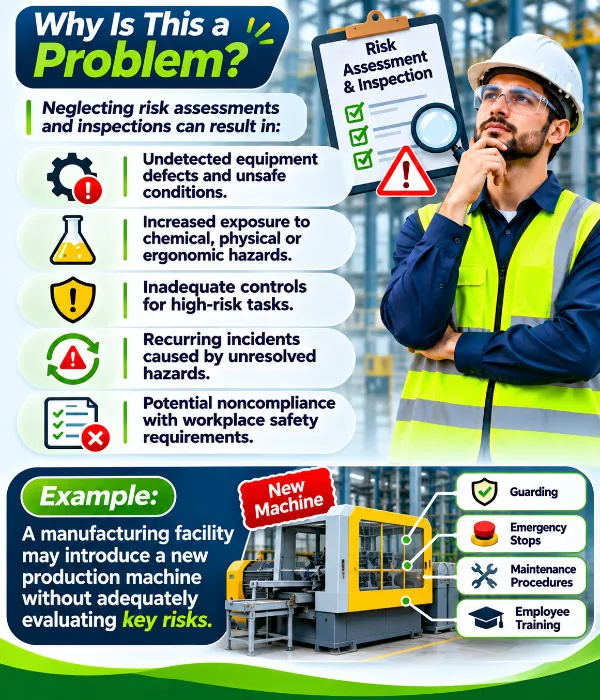
Neglecting risk assessments and inspections can result in:
- Undetected equipment defects and unsafe working conditions.
- Increased exposure to chemical, physical or ergonomic hazards.
- Inadequate controls for high-risk tasks.
- Recurring incidents caused by unresolved hazards.
- Potential noncompliance with applicable workplace safety requirements.
For example, a manufacturing facility may introduce a new production machine without adequately evaluating guarding, emergency stops, maintenance procedures and employee training requirements. If these risks are not identified before the machine enters operation, workers could be exposed to preventable hazards.
How to Avoid This Mistake
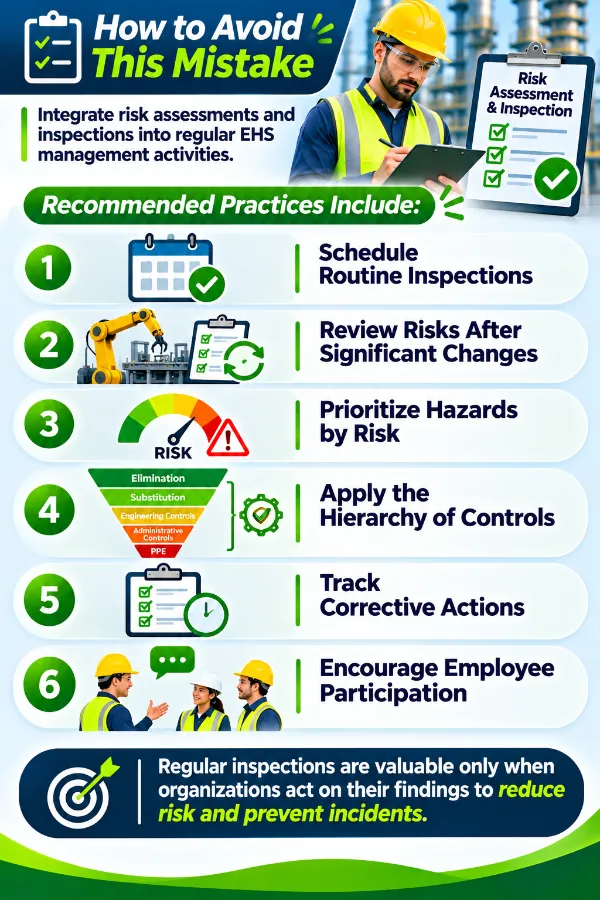
Organizations should integrate risk assessments and inspections into their regular EHS management activities.
Recommended practices include:
- Schedule routine inspections: Establish inspection frequencies based on workplace risks, equipment requirements and applicable regulations.
- Review risks after significant changes: Reassess hazards when introducing new equipment, materials, processes or work activities.
- Prioritize hazards by risk: Evaluate the likelihood and potential severity of harm to determine which issues require immediate attention.
- Apply the hierarchy of controls: Where feasible, eliminate hazards first, then consider substitution, engineering controls, administrative controls and PPE.
- Track corrective actions: Assign an owner and target date to each finding and verify that corrective measures are effective.
- Encourage employee participation: Workers often recognize practical hazards that may not be obvious during a management-level review.
Regular inspections are valuable only when organizations act on their findings. The goal is not simply to identify hazards but to reduce risk and prevent incidents.
Strengthen EHS Risk Management with SheelPlatform
Effective risk management requires more than identifying hazards. Organizations must assess risks, assign responsibilities, implement controls and verify that corrective actions have been completed.
SheelPlatform connects risk assessments, workplace inspections, incident management and corrective actions within a broader EHS management environment. Its workflows are designed to help teams move from identifying an issue to assigning actions, collecting supporting evidence and tracking closure.
This connected approach can help EHS professionals improve visibility into unresolved findings and coordinate follow-up activities more efficiently.
Discover https://sheelplatform.com to explore its approach to integrated EHS, risk and compliance management.
Best Practices for Improving EHS Compliance
Avoiding these three common mistakes requires more than occasional safety checks. Organizations need a structured approach that makes compliance part of everyday operations. The following practices can help strengthen an EHS management system.
Regular employee training: Improves hazard awareness and safe work practices.
Accurate documentation: Supports audits, accountability and compliance verification.
Routine risk assessments: Helps identify and prioritize workplace hazards.
Incident investigation: Identifies root causes and opportunities for prevention.
Corrective action tracking: Ensures identified problems are addressed and verified.
Management involvement: Provides resources, accountability and leadership support.
Continuous improvement: Helps the EHS program adapt to changing risks and requirements.
Businesses can also consider using a recognized EHS management framework, such as ISO 45001 for occupational health and safety management or ISO 14001 for environmental management. These standards provide structured approaches to managing risks, meeting applicable obligations and improving organizational performance.
However, certification alone does not guarantee compliance with every legal requirement. Organizations must identify and meet the specific obligations that apply to their operations and jurisdictions.
Simplify EHS Compliance with SheelPlatform
Managing environmental, health and safety compliance across multiple processes can be challenging when information and responsibilities are spread across different systems.
SheelPlatform by Sheel Technologies brings EHS, risk management, compliance, safety operations, learning and environmental workflows together in one connected workspace.
With integrated modules for compliance management, audits and inspections, risk assessments, incident management, learning management and corrective actions, SheelPlatform is designed to help organizations improve coordination and gain better visibility into their EHS activities.
Whether your organization wants to improve compliance tracking, organize safety activities or strengthen follow-up on workplace risks, SheelPlatform offers a connected approach to managing EHS operations.
Conclusion
EHS compliance plays a critical role in protecting employees, reducing environmental risks and supporting responsible business operations. Yet inadequate training, poor documentation and irregular risk assessments remain common challenges for organizations across many industries.
The good news is that these mistakes can often be addressed through consistent training organized recordkeeping, routine inspections and effective corrective action management.
Businesses should regularly review their EHS procedures, involve employees in identifying hazards and ensure that safety responsibilities are clearly assigned. They should also monitor changes in operations and applicable regulations to keep their compliance programs effective.
The key to successful EHS compliance is consistency. By identifying problems early and continuously improving workplace practices organizations can build a safer work environment, reduce avoidable risks and establish a stronger foundation for long-term operational success.