Diabetes can affect a person’s health, concentration and ability to perform everyday workplace activities. Whether someone works in an office, factory, warehouse, healthcare facility or outdoor environment, sudden changes in blood sugar levels can sometimes lead to serious health problems.
Recognizing the diabetes warning signs at work can help employees, managers and coworkers identify when someone may need medical assistance. Symptoms such as sudden sweating, shaking, confusion, blurred vision and extreme thirst should never be ignored, particularly when they appear unexpectedly.
Some diabetes-related emergencies develop quickly, while others become more serious over time. Knowing what to look for and how to respond can help prevent injuries and ensure employees receive appropriate medical attention.
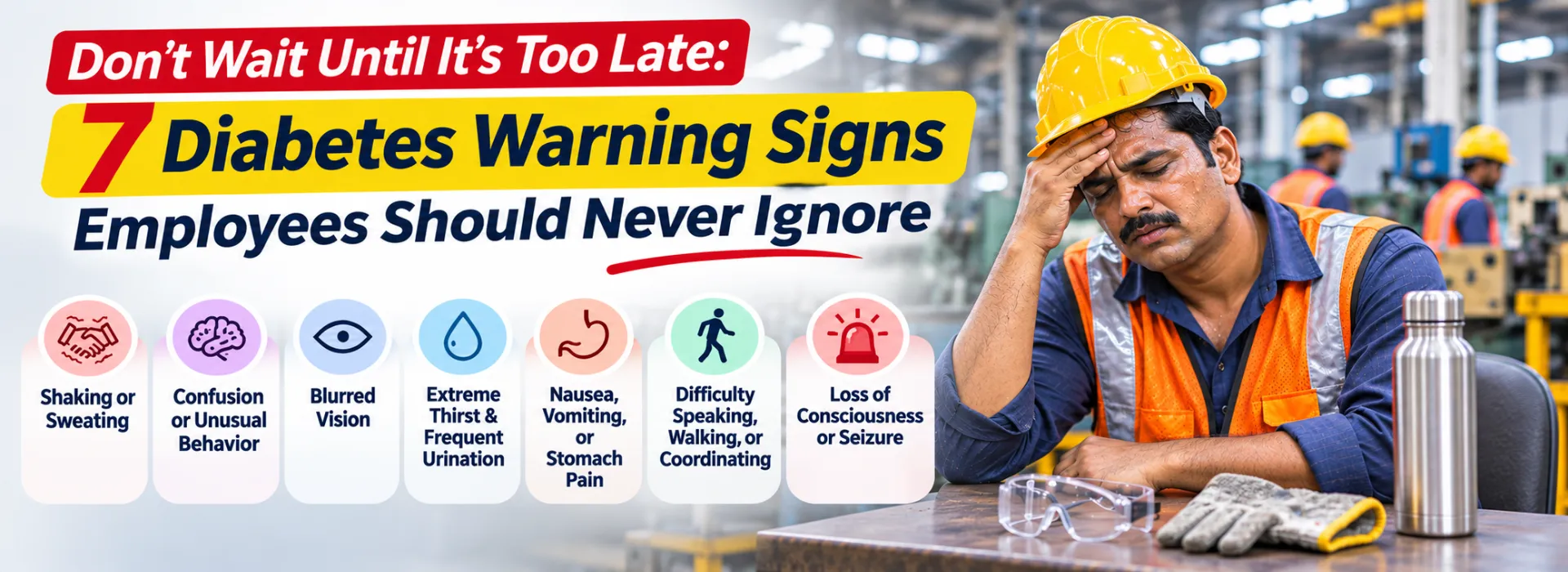
This guide explains seven important diabetes warning signs employees should never ignore and how workplaces can respond safely.
Why Is It Important to Recognize Diabetes Warning Signs at Work?
Diabetes is a condition that affects how the body regulates blood glucose, commonly known as blood sugar. When blood sugar levels become too high or too low, a person may experience symptoms that interfere with their normal activities.
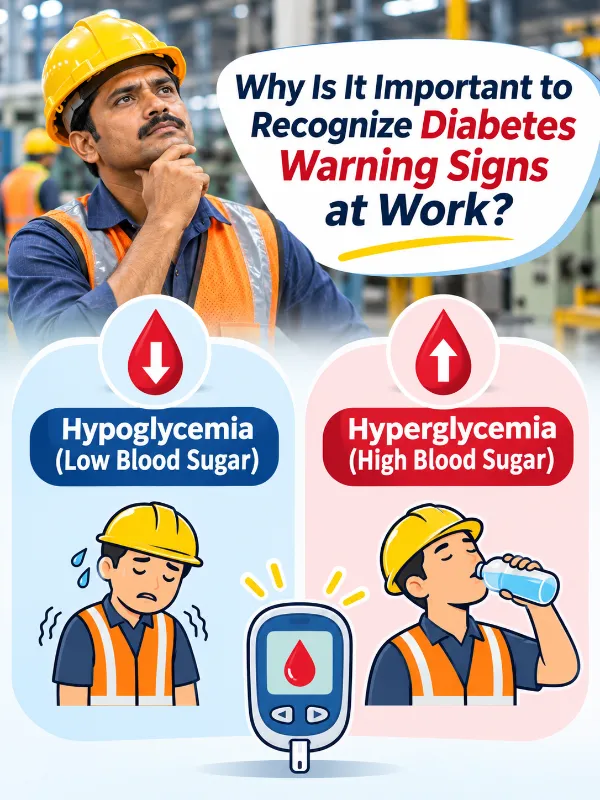
Two important blood sugar conditions are:
- Hypoglycemia (Low Blood Sugar)
Hypoglycemia occurs when blood glucose levels fall below the healthy range. It can develop quickly and affect concentration, coordination, mood and awareness. Common symptoms include shaking, sweating, dizziness, hunger and confusion.
- Hyperglycemia (High Blood Sugar)
Hyperglycemia occurs when blood glucose levels become too high. Symptoms may include increased thirst, frequent urination, blurred vision, fatigue and weakness. In severe cases, extremely high blood sugar can contribute to a life-threatening complication called diabetic ketoacidosis (DKA).
Understanding these conditions can help workplaces recognize concerning symptoms and respond appropriately.
7 Diabetes Warning Signs at Work Employees Should Never Ignore
Recognizing the early signs of blood sugar problems can help employees and coworkers take appropriate action before a situation becomes more serious.
Here are seven important diabetes warning signs to watch for in the workplace.
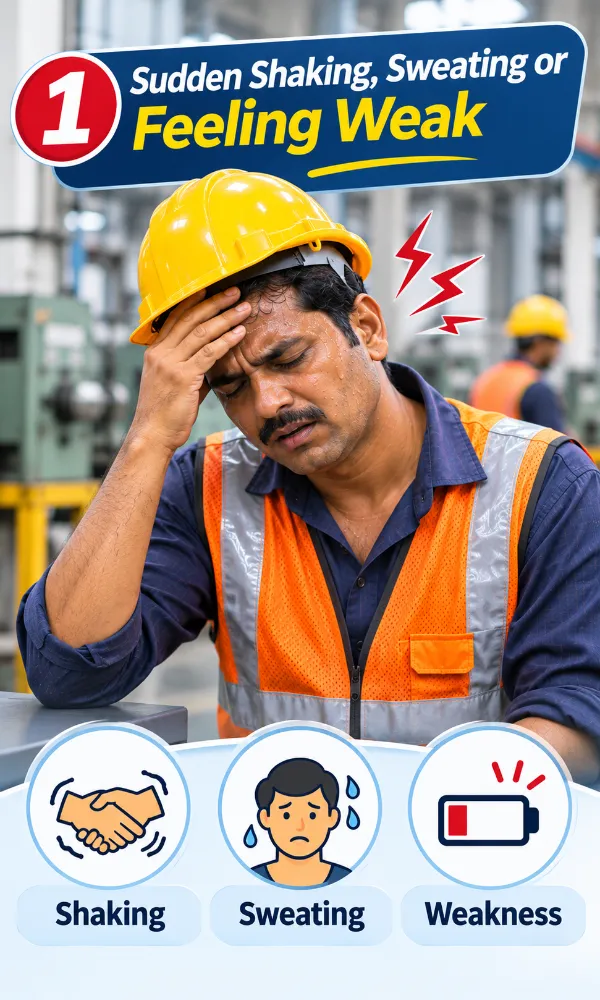
1. Sudden Shaking, Sweating or Feeling Weak
Sudden shaking, sweating and weakness are common warning signs of low blood sugar (hypoglycemia).
An employee may appear completely normal one moment and suddenly begin feeling dizzy, hungry, nervous or physically weak. These symptoms can develop quickly and make it difficult to continue normal work activities.
Other possible symptoms include:
- Shaking hands or trembling
- Sudden sweating
- Unusual hunger
- Dizziness or lightheadedness
- Fast heartbeat
- Pale skin
- Unusual tiredness
- Feeling anxious or irritable
These symptoms should not be dismissed as ordinary workplace stress or exhaustion.
What should coworkers do?
Recognizing the early signs of blood sugar problems can help employees and coworkers take appropriate action before a situation becomes more serious.
Here are seven important diabetes warning signs to watch for in the workplace.
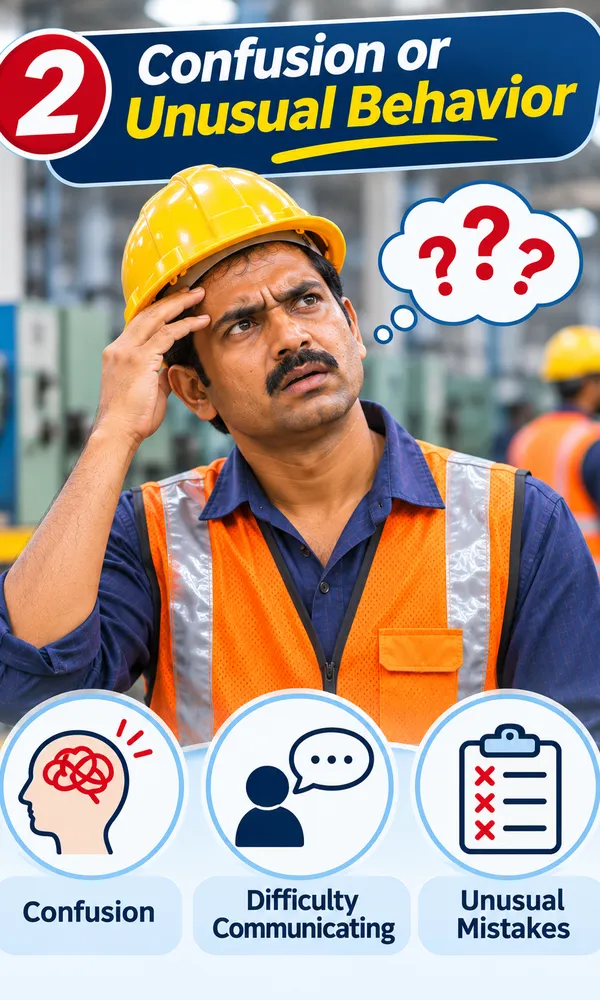
2. Confusion or Unusual Behavior
Sudden confusion or unusual behavior can be another important sign of a blood sugar problem.
Low blood sugar can affect how the brain functions, making it difficult for an employee to think clearly, communicate or complete familiar tasks.
You may notice that an employee:
- Repeats the same questions.
- Has difficulty finding the right words.
- Appears confused about their surroundings.
- Makes unusual mistakes.
- Struggles to follow instructions.
- Becomes unusually irritable.
- Has difficulty concentrating.
Coworkers sometimes mistake these changes for stress, tiredness or a lack of attention.
However, sudden confusion should always be taken seriously, especially when it occurs alongside sweating, shaking, dizziness or weakness.
What should coworkers do?
Stay calm, avoid arguing and help the employee move away from potentially dangerous work activities. If confusion is severe, worsening or accompanied by other emergency symptoms, seek immediate medical help.

3. Blurred Vision or Trouble Seeing Clearly
Changes in blood glucose levels can affect vision. An employee may suddenly experience blurred vision, difficulty focusing or trouble reading documents and viewing computer screens.
This can become particularly concerning in workplaces where employees:
- Operate heavy machinery.
- Drive company vehicles.
- Work at heights.
- Handle tools or equipment.
- Perform tasks requiring precise vision.
Possible symptoms include:
- Blurred or unclear vision
- Difficulty focusing on objects
- Trouble reading documents
- Difficulty seeing workplace equipment clearly
- Sudden changes in visual comfort
Although blurred vision can be associated with changes in blood sugar, it is not exclusive to diabetes. Other medical conditions can also cause sudden vision problems.
What should coworkers do?
Encourage the employee to stop driving, operating machinery or performing other activities that could put them or others at risk.
Sudden vision changes, particularly when accompanied by other serious symptoms, require prompt medical assessment.
Workplace safety should always come before productivity.

4. Extreme Thirst and Frequent Urination
Excessive thirst and frequent urination are recognized symptoms of high blood sugar (hyperglycemia).
When blood glucose levels become too high, the body attempts to remove excess glucose through urine. This can increase urination and contribute to dehydration.
An employee may frequently request water, visit the restroom more often or complain of a persistently dry mouth.
Other possible symptoms include:
- Increased thirst
- Frequent urination
- Dry mouth
- Unusual tiredness
- Headaches
- Difficulty concentrating
- General weakness
These symptoms may develop gradually rather than appearing suddenly.
Although increased thirst and urination do not automatically indicate diabetes, persistent symptoms should not be ignored.
What should coworkers do?
Employees experiencing these symptoms should consider seeking medical advice, especially if the symptoms continue or become more noticeable.
Employers can support workplace health by providing reasonable access to drinking water and restroom facilities.
If extreme thirst and frequent urination occur alongside vomiting, abdominal pain, fruity-smelling breath or difficulty breathing, emergency medical assessment may be necessary.
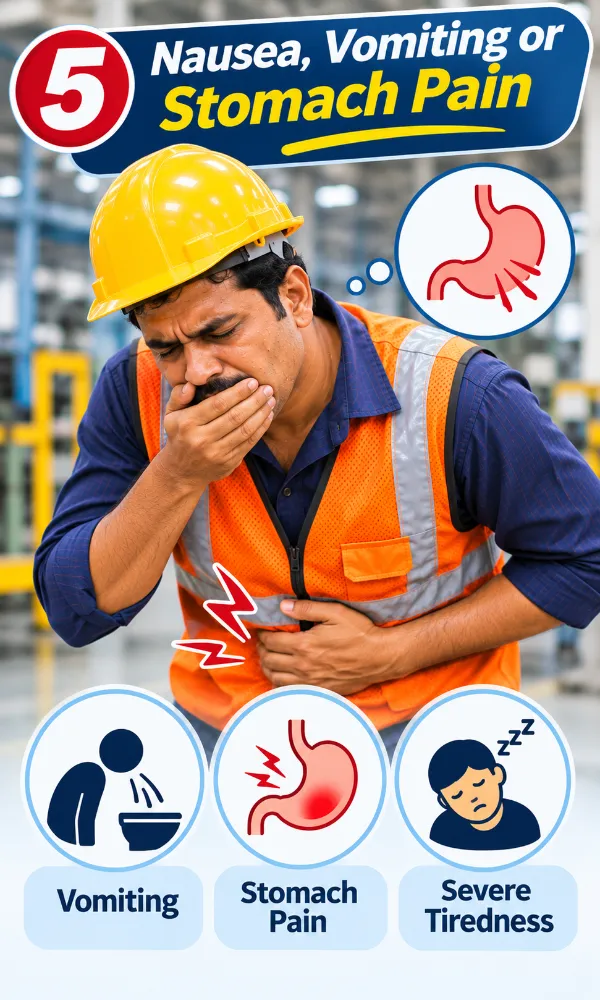
5. Nausea, Vomiting or Stomach Pain
Nausea, vomiting and abdominal pain can sometimes indicate a serious diabetes-related complication called diabetic ketoacidosis (DKA).
DKA occurs when the body does not have enough insulin to use glucose effectively for energy. The body begins breaking down fat, producing substances called ketones. Excessive ketone buildup can become dangerous.
Symptoms may include:
- Nausea
- Repeated vomiting
- Stomach or abdominal pain
- Extreme thirst
- Frequent urination
- Severe tiredness
- Fruity-smelling breath
- Dry mouth
- Deep or difficult breathing
These symptoms should receive particular attention when several appear together.
DKA can develop over time and may become life-threatening without treatment.
What should coworkers do?
Do not assume that the employee simply has an upset stomach or needs a short break.
If the employee has repeated vomiting, difficulty breathing, fruity-smelling breath or multiple symptoms of DKA, seek emergency medical assistance immediately.
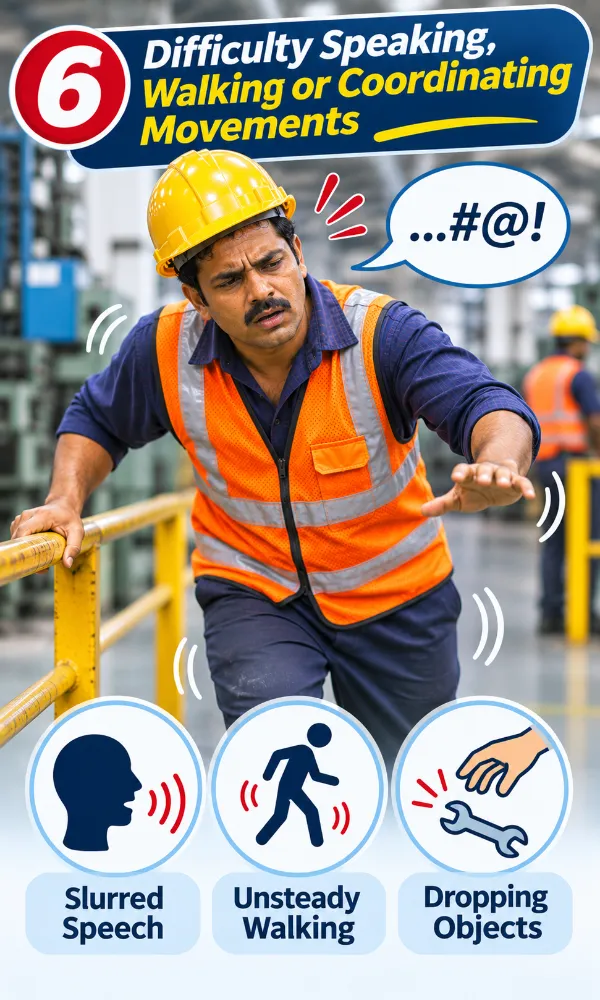
6. Difficulty Speaking, Walking or Coordinating Movements
Blood sugar problems, particularly severe hypoglycemia, can affect brain function and coordination.
An employee may suddenly struggle to speak clearly, walk normally or control their movements.
Possible warning signs include:
- Slurred speech
- Stumbling while walking
- Dropping objects
- Difficulty standing
- Unusual or slow movements
- Trouble completing familiar tasks
- Confusion while moving around
These symptoms can create serious workplace safety risks.
For example, an employee operating machinery could injure themselves if they suddenly lose coordination. Someone working on stairs or at a height could also face a significant risk of falling.
What should coworkers do?
Sudden difficulty speaking, walking or coordinating movements can also indicate a stroke. Do not assume that these symptoms are caused by diabetes. Seek emergency medical assistance immediately, particularly if symptoms begin suddenly.
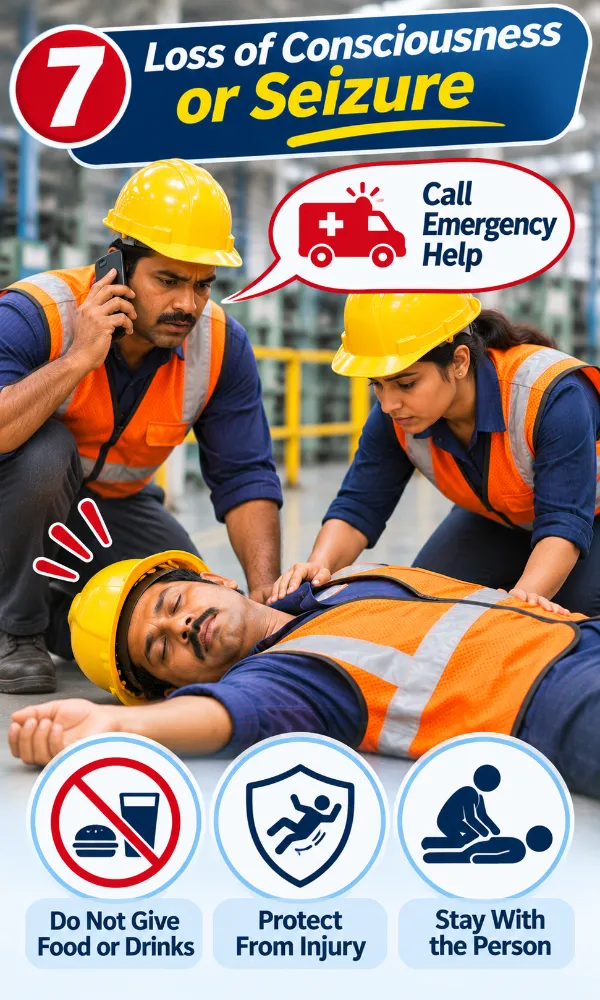
7. Loss of Consciousness or Seizure
Loss of consciousness or a seizure is a medical emergency.
Severe hypoglycemia can cause a person to faint, lose consciousness or experience a seizure. However, other serious medical conditions can cause similar symptoms.
Coworkers should never attempt to diagnose the cause.
If an employee becomes unconscious or experiences a seizure:
- Call emergency medical services immediately.
- Do not give food, drinks or oral medication.
- Never put anything in the person’s mouth during a seizure.
- Protect the person from nearby objects and potential injuries.
- Do not restrain their movements during a seizure.
- Follow workplace emergency procedures.
- Stay with the person until medical help arrives, if it is safe.
If the employee has a medical identification bracelet, emergency instructions or relevant medical information, share it with emergency responders when appropriate.
Quick action can make an important difference in an emergency.
What Should a Workplace Do During a Diabetes-Related Emergency?
Recognizing the warning signs is only the first step. Employees and managers should also understand how to respond when someone experiences a possible diabetes-related emergency.
The first priority should always be the person’s safety.
If the employee is conscious and able to communicate, listen to their instructions. Some people with diabetes carry glucose tablets, snacks, medication or other supplies as part of their personal diabetes management plan.
Allow them to follow their individual care instructions when they can do so safely.
However, if the person becomes unconscious, experiences a seizure, cannot swallow safely, has severe difficulty breathing or shows signs of a serious medical emergency, call emergency medical services immediately.
Never give anything by mouth to someone who is unconscious or unable to swallow safely.
How Employers Can Create a Diabetes-Friendly Workplace
Employees with diabetes may need to manage their condition throughout the working day. A supportive workplace can make it easier for them to maintain their health while performing their professional responsibilities. Employers can help by:
Providing Access to Drinking Water: Employees should have reasonable access to drinking water throughout the working day.
Allowing Appropriate Meal and Snack Breaks: Employees may need regular meal breaks or snacks to manage their blood glucose levels.
Supporting Blood Sugar Monitoring: Allow employees to check their blood glucose levels and use necessary diabetes management devices.
Supporting Medical Appointments: Employees should have appropriate opportunities to attend medical appointments and follow their treatment plans.
Providing Emergency Awareness Training: Basic workplace training can help employees recognize concerning symptoms and understand when emergency assistance is required.
Respecting Employee Privacy: Medical information should be handled confidentially. Employers should not make assumptions about an employee’s health or disclose private medical information unnecessarily.
Maintaining Clear Emergency Procedures: Employees should know how to contact emergency services, report a medical emergency and locate workplace first-aid resources. A supportive workplace benefits employees while helping organizations maintain a safer working environment.
When Should You Call Emergency Medical Services?
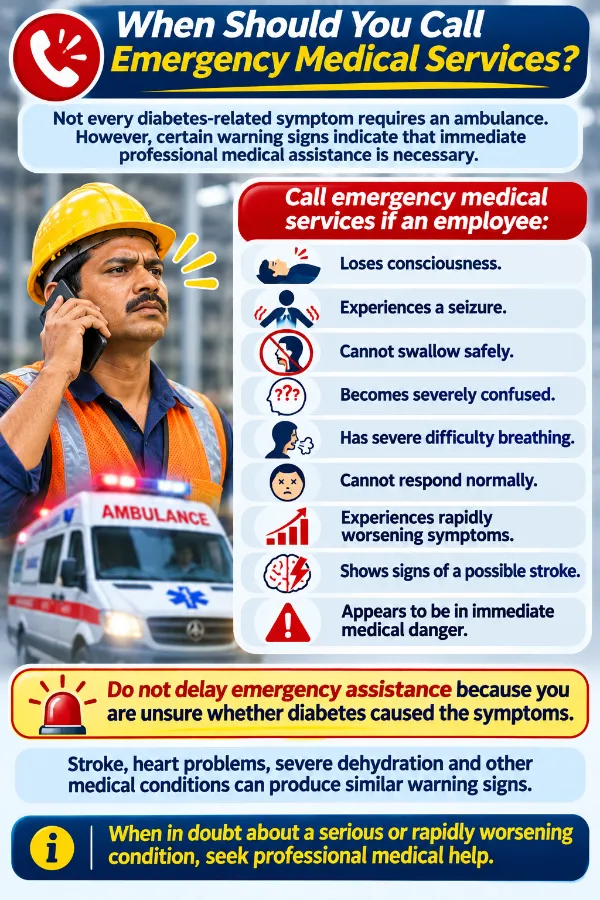
Not every diabetes-related symptom requires an ambulance. However, certain warning signs indicate that immediate professional medical assistance is necessary.
Call emergency medical services if an employee:
- Loses consciousness.
- Experiences a seizure.
- Cannot swallow safely.
- Becomes severely confused.
- Has severe difficulty breathing.
- Cannot respond normally.
- Experiences rapidly worsening symptoms.
- Shows signs of a possible stroke.
- Appears to be in immediate medical danger.
Do not delay emergency assistance because you are unsure whether diabetes caused the symptoms.
Stroke, heart problems, severe dehydration and other medical conditions can produce similar warning signs.
When in doubt about a serious or rapidly worsening condition, seek professional medical help.
How Can Employers Prepare for Diabetes Emergencies?
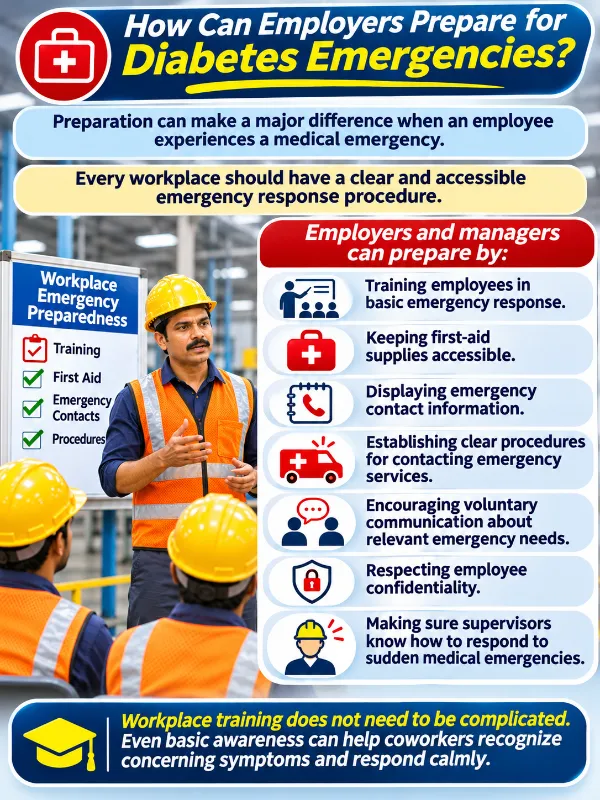
Preparation can make a major difference when an employee experiences a medical emergency.
Every workplace should have a clear and accessible emergency response procedure.
Employers and managers can prepare by:
- Training employees in basic emergency response.
- Keeping first-aid supplies accessible.
- Displaying emergency contact information.
- Establishing clear procedures for contacting emergency services.
- Encouraging voluntary communication about relevant emergency needs.
- Respecting employee confidentiality.
- Making sure supervisors know how to respond to sudden medical emergencies.
Workplace training does not need to be complicated. Even basic awareness can help coworkers recognize concerning symptoms and respond calmly.
Frequently Asked Questions About Diabetes Warning Signs at Work
1. What are the most common warning signs of diabetes at work?
Common warning signs include excessive thirst, frequent urination, fatigue, blurred vision, shaking, sweating, dizziness and confusion. These symptoms may be associated with high or low blood sugar, although they can also occur with other medical conditions.
2. What are the signs of low blood sugar in employees?
Common signs of low blood sugar (hypoglycemia) include shaking, sweating, hunger, dizziness, weakness, a fast heartbeat, irritability and confusion. Severe hypoglycemia can cause seizures or loss of consciousness.
3. Can high blood sugar cause confusion at work?
Severe high blood sugar can sometimes cause confusion and changes in awareness. However, confusion can have many medical causes and should not automatically be attributed to diabetes.
4. What should coworkers do if someone with diabetes becomes unwell?
Stay calm, listen to the employee if they can communicate and allow them to follow their personal diabetes care plan. If they become unconscious, have a seizure, cannot swallow safely or show severe symptoms, call emergency medical services immediately.
5. Can diabetes affect an employee’s ability to work safely?
Yes. Significant changes in blood glucose can affect concentration, vision, coordination and awareness. Employees experiencing these symptoms may need to stop safety-sensitive activities and receive appropriate assistance.
6. How can employers support employees with diabetes?
Employers can provide reasonable access to water, meal and snack breaks, blood glucose monitoring, necessary medication, medical appointments and appropriate workplace accommodations while respecting employee privacy.
7. When is a diabetes-related emergency life-threatening?
Severe hypoglycemia, diabetic ketoacidosis, loss of consciousness, seizures and serious breathing difficulties can be life-threatening. These situations require immediate medical attention.
Conclusion: Recognizing Diabetes Warning Signs Can Help Save Lives
Diabetes management does not stop when an employee enters the workplace. People with diabetes manage their health throughout the day, including during meetings, work shifts, business travel and demanding professional responsibilities.
Recognizing the seven diabetes warning signs at work can help employees, managers and coworkers identify potentially serious health problems and respond appropriately.
The goal is not to diagnose someone based on their symptoms. It is to recognize concerning changes, prioritize workplace safety, respect employee privacy and seek professional medical assistance when necessary.
A workplace that understands diabetes warning signs is better prepared to support its employees and respond calmly during medical emergencies.