National Electrical Safety Week Theme 2026: Competency, Compliance and Caution Ensuring Electrical Safety
Electrical safety remains one of the most critical aspects of industrial operations, infrastructure development and workplace management. Every year organizations across India observe National Electrical Safety Week to promote awareness, strengthen safety practices and reduce electrical accidents. As industries continue to adopt advanced technologies and complex electrical systems, the importance of safety awareness becomes even greater.
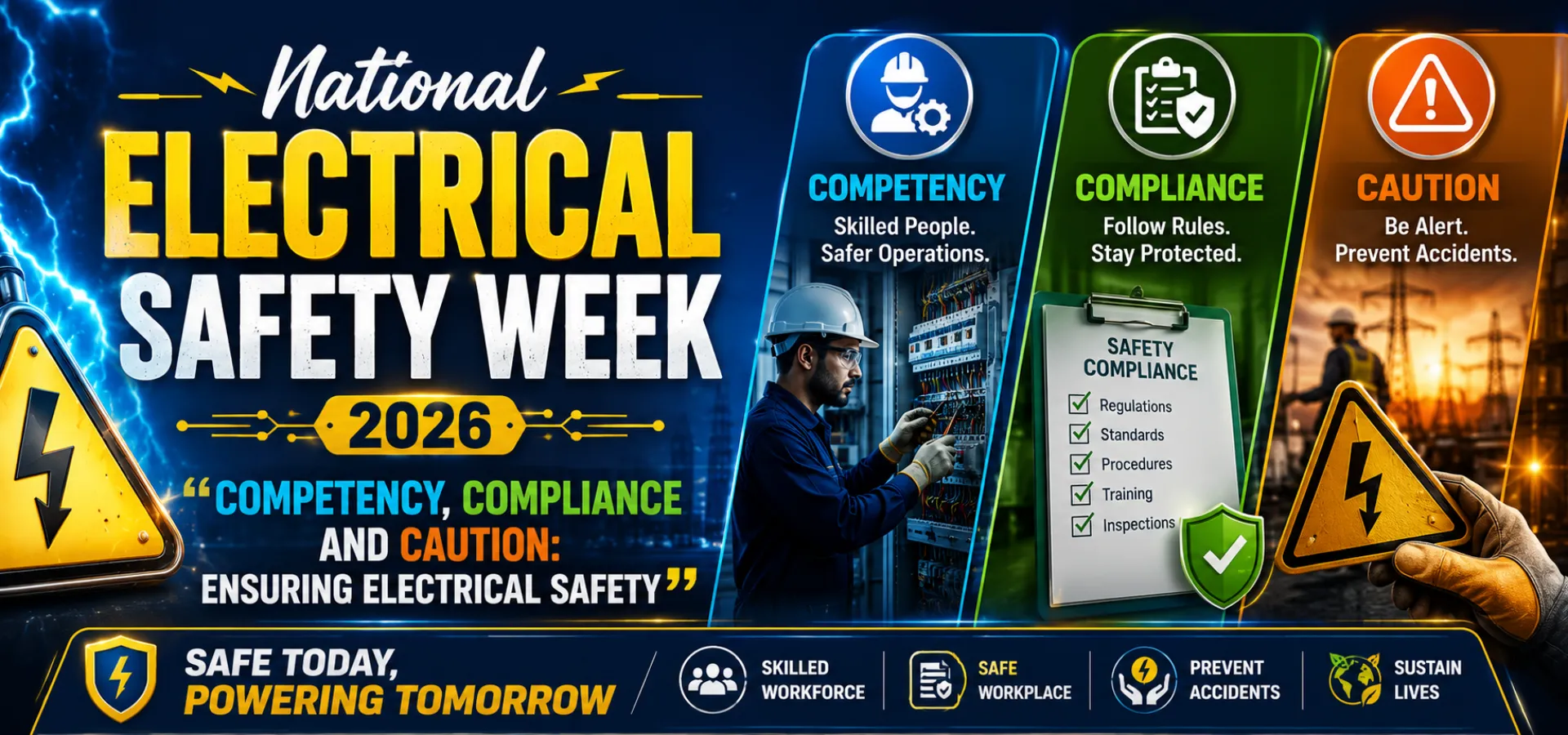
The National Electrical Safety Week Theme 2026 is: “Competency, Compliance and Caution: Ensuring Electrical Safety”
This theme highlights the need for skilled personnel, adherence to safety regulations and proactive vigilance while working with electrical systems. It serves as a reminder that electrical safety is not only the responsibility of safety professionals but also of every individual involved in electrical operations.
What is National Electrical Safety Week?
National Electrical Safety Week is an annual safety awareness campaign observed across India to promote safe electrical practices in industries, commercial establishments, institutions and public spaces. The initiative aims to educate workers, engineers, supervisors, contractors and organizations about the risks associated with electricity and the measures required to prevent accidents.
Electrical hazards can lead to severe injuries, fatalities, fires, equipment failures and substantial property damage. Through awareness programs, training sessions, inspections and safety campaigns, National Electrical Safety Week encourages organizations to build a strong safety culture.
The observance of National Electrical Safety Week 2026 provides an opportunity for industries to evaluate their existing safety systems and implement improvements that can reduce workplace risks.
National Electrical Safety Week 2026 Overview
National Electrical Safety Week 2026 is being observed from 26 June 2026 to 2 July 2026. During this period organizations throughout the country conduct various safety-related activities to reinforce the importance of electrical safety.
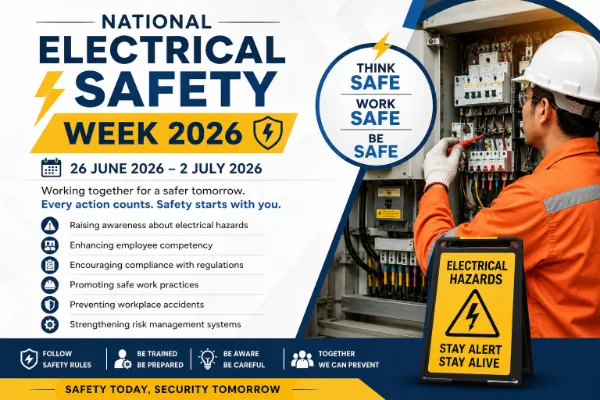
The observance focuses on:
- Raising awareness about electrical hazards
- Enhancing employee competency
- Encouraging compliance with regulations
- Promoting safe work practices
- Preventing workplace accidents
- Strengthening risk management systems
The week serves as a platform for industries to engage employees in meaningful discussions about safety and create a proactive approach toward accident prevention.
National Electrical Safety Week Theme 2026
The official National Electrical Safety Week Theme 2026 is: “Competency, Compliance and Caution: Ensuring Electrical Safety”
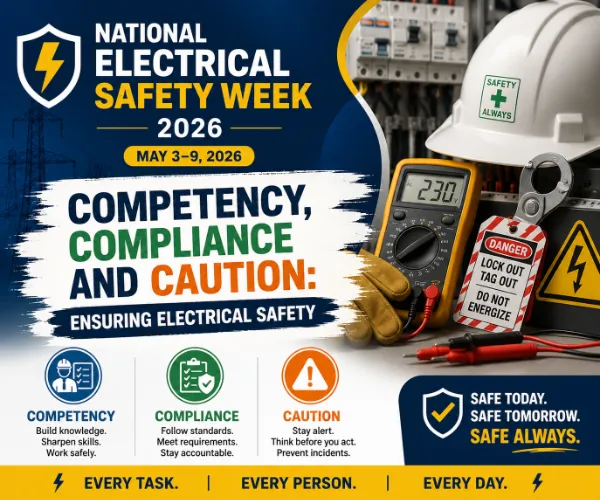
This theme emphasizes three essential pillars that contribute to effective electrical safety management.
- Competency
- Compliance
- Caution
Together, these pillars form the foundation of a robust electrical safety culture. Organizations that focus on these areas can significantly reduce the likelihood of accidents and improve operational reliability.
The theme recognizes that modern workplaces require more than basic safety procedures. Employees must possess the necessary knowledge and skills organizations must comply with regulations and everyone must maintain a cautious attitude while performing electrical work.
Understanding the Three Pillars of the National Electrical Safety Week Theme 2026
1. Competency
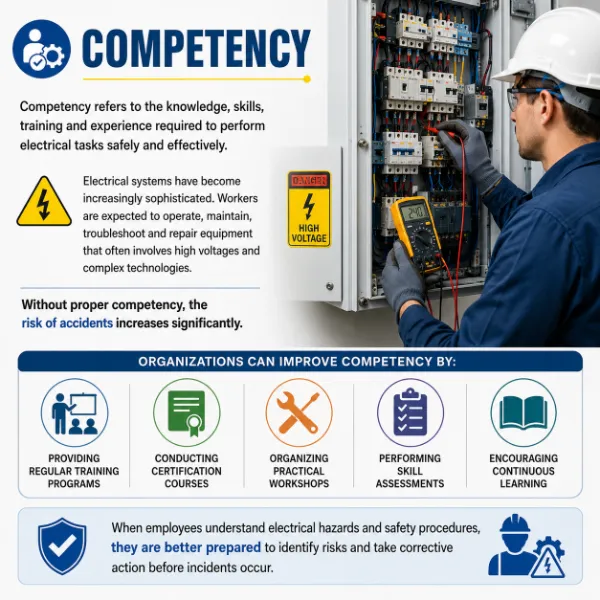
Competency refers to the knowledge, skills, training and experience required to perform electrical tasks safely and effectively. Electrical systems have become increasingly sophisticated. Workers are expected to operate, maintain, troubleshoot and repair equipment that often involves high voltages and complex technologies. Without proper competency, the risk of accidents increases significantly.
Organizations can improve competency by:
- Providing regular training programs
- Conducting certification courses
- Organizing practical workshops
- Performing skill assessments
- Encouraging continuous learning
When employees understand electrical hazards and safety procedures, they are better prepared to identify risks and take corrective action before incidents occur.
2. Compliance
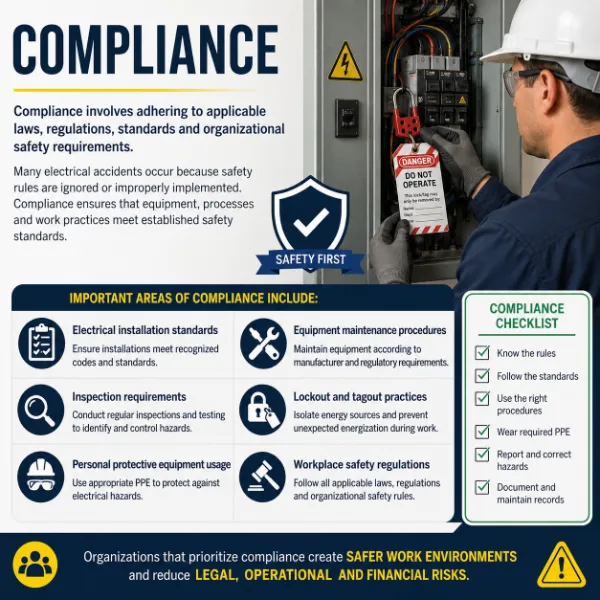
Compliance involves adhering to applicable laws, regulations, standards and organizational safety requirements. Many electrical accidents occur because safety rules are ignored or improperly implemented. Compliance ensures that equipment, processes and work practices meet established safety standards.
Important areas of compliance include:
- Electrical installation standards
- Inspection requirements
- Equipment maintenance procedures
- Lockout and tagout practices
- Personal protective equipment usage
- Workplace safety regulations
Organizations that prioritize compliance create safer work environments and reduce legal, operational and financial risks.
3. Caution
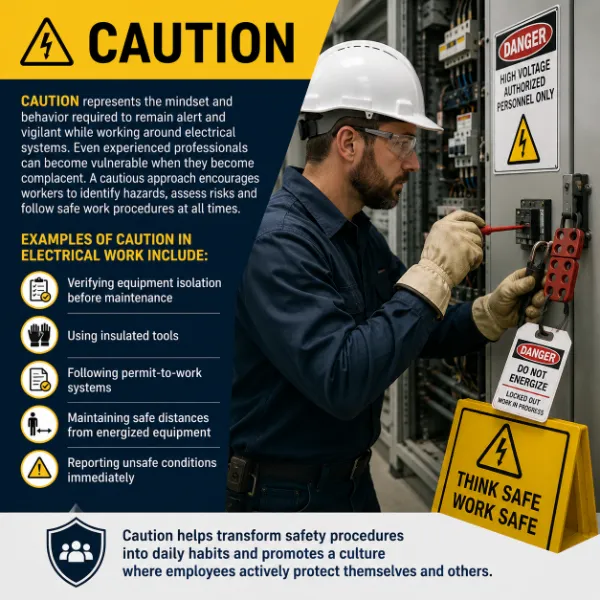
Caution represents the mindset and behavior required to remain alert and vigilant while working around electrical systems. Even experienced professionals can become vulnerable when they become complacent. A cautious approach encourages workers to identify hazards, assess risks and follow safe work procedures at all times.
Examples of caution in electrical work include:
- Verifying equipment isolation before maintenance
- Using insulated tools
- Following permit-to-work systems
- Maintaining safe distances from energized equipment
- Reporting unsafe conditions immediately
Caution helps transform safety procedures into daily habits and promotes a culture where employees actively protect themselves and others.
National Electrical Safety Week 2026 English Video
National Electrical Safety Week 2026 Hindi Video
Electrical Safety Videos
Why Electrical Safety Matters More Than Ever
Electricity powers modern industries, manufacturing facilities, commercial buildings, data centers and infrastructure projects. While it enables productivity and innovation, it also presents serious hazards.
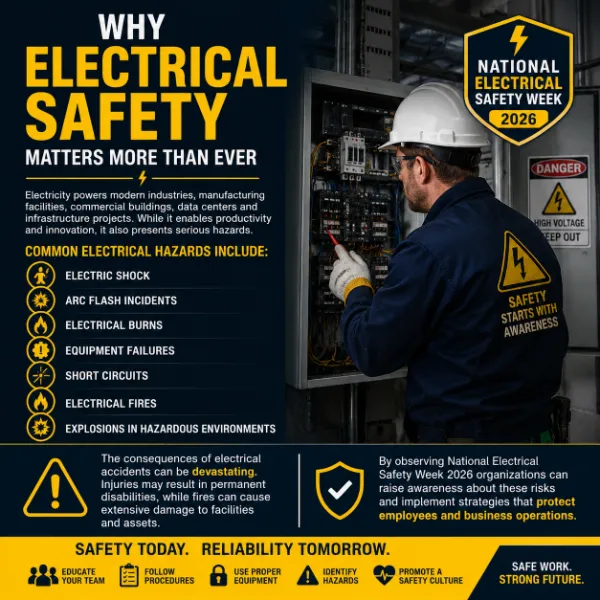
Common electrical hazards include:
- Electric shock
- Arc flash incidents
- Electrical burns
- Equipment failures
- Short circuits
- Electrical fires
- Explosions in hazardous environments
The consequences of electrical accidents can be devastating. Injuries may result in permanent disabilities, while fires can cause extensive damage to facilities and assets.
By observing National Electrical Safety Week 2026 organizations can raise awareness about these risks and implement strategies that protect employees and business operations.
The Role of Training in Electrical Safety
Training is one of the most effective methods of accident prevention. Well-trained employees are more likely to recognize hazards and follow established safety procedures.
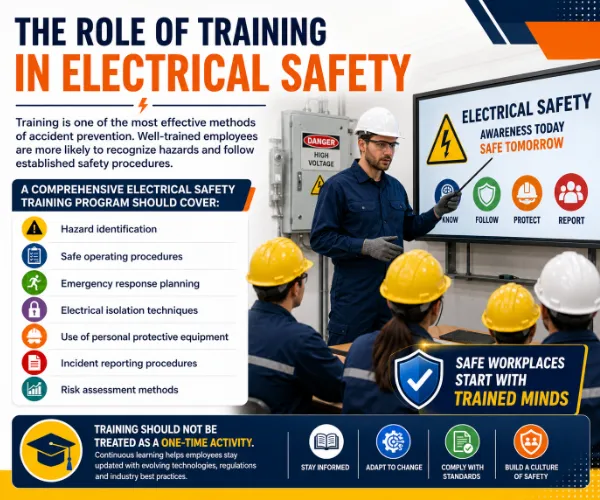
A comprehensive electrical safety training program should cover:
- Hazard identification
- Safe operating procedures
- Emergency response planning
- Electrical isolation techniques
- Use of personal protective equipment
- Incident reporting procedures
- Risk assessment methods
Training should not be treated as a one-time activity. Continuous learning helps employees stay updated with evolving technologies, regulations and industry best practices.
Building a Culture of Compliance
Creating a culture of compliance requires commitment from both management and employees.

Organizations should:
- Establish clear safety policies
- Conduct regular inspections
- Maintain accurate records
- Review safety procedures periodically
- Encourage accountability at all levels
- Address non-compliance promptly
Management plays a critical role in demonstrating commitment to safety. When leadership prioritizes compliance, employees are more likely to follow safety procedures consistently.
A strong compliance culture not only improves safety performance but also enhances operational efficiency and organizational reputation.
Practical Ways to Promote Caution in the Workplace
Developing a cautious workforce requires continuous engagement and reinforcement. Organizations can promote caution through:
Safety Talks: Regular safety discussions keep employees informed about hazards and preventive measures.
Toolbox Meetings: Short daily or weekly meetings provide opportunities to discuss specific risks associated with ongoing work.
Hazard Reporting Programs: Employees should be encouraged to report unsafe conditions without fear of consequences.
Near-Miss Reporting: Analyzing near misses helps organizations identify weaknesses before accidents occur.
Risk Assessments: Routine risk assessments enable teams to recognize hazards and implement appropriate controls. These initiatives help create a workplace environment where caution becomes a shared responsibility.
Activities Conducted During National Electrical Safety Week 2026
Organizations across various sectors can organize activities that support the objectives of National Electrical Safety Week.
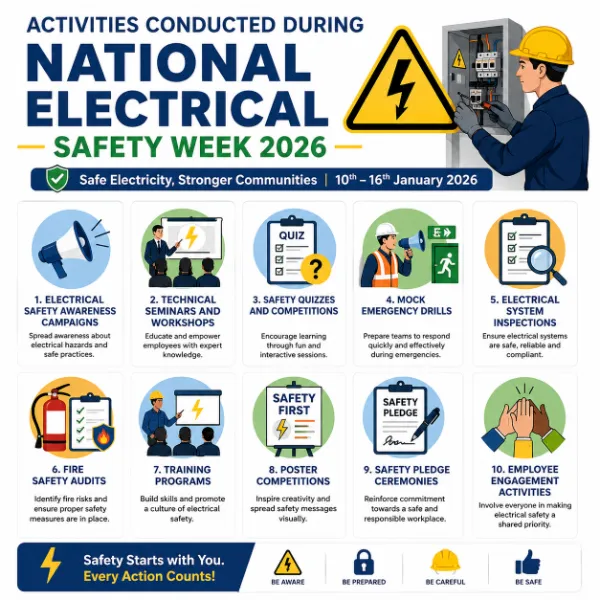
Popular activities include:
- Electrical safety awareness campaigns
- Technical seminars and workshops
- Safety quizzes and competitions
- Mock emergency drills
- Electrical system inspections
- Fire safety audits
- Training programs
- Poster competitions
- Safety pledge ceremonies
- Employee engagement activities
These programs encourage participation and reinforce the importance of safe electrical practices throughout the organization.
Benefits of Observing National Electrical Safety Week 2026
The observance of National Electrical Safety Week provides several benefits for industries and professionals.
Reduced Workplace Accidents: Improved awareness and training help minimize electrical incidents.
Enhanced Employee Competence: Workers gain valuable knowledge and skills that improve safety performance.
Better Regulatory Compliance: Organizations strengthen adherence to applicable standards and regulations.
Increased Operational Reliability: Safe electrical systems experience fewer failures and disruptions.
Stronger Safety Culture: Employees become more engaged in safety initiatives and risk management activities.
Improved Business Reputation: Organizations that prioritize safety demonstrate responsibility and professionalism to stakeholders.
How Industrial Organizations Can Participate
Industrial organizations can maximize the impact of National Electrical Safety Week 2026 by adopting a structured approach.
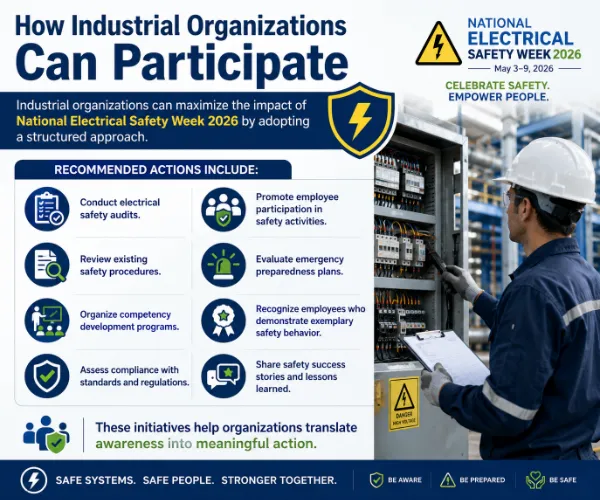
Recommended actions include:
- Conduct electrical safety audits.
- Review existing safety procedures.
- Organize competency development programs.
- Assess compliance with standards and regulations.
- Promote employee participation in safety activities.
- Evaluate emergency preparedness plans.
- Recognize employees who demonstrate exemplary safety behavior.
- Share safety success stories and lessons learned.
These initiatives help organizations translate awareness into meaningful action.
The Future of Electrical Safety
The future of electrical safety will be shaped by technology, automation and data-driven decision-making.
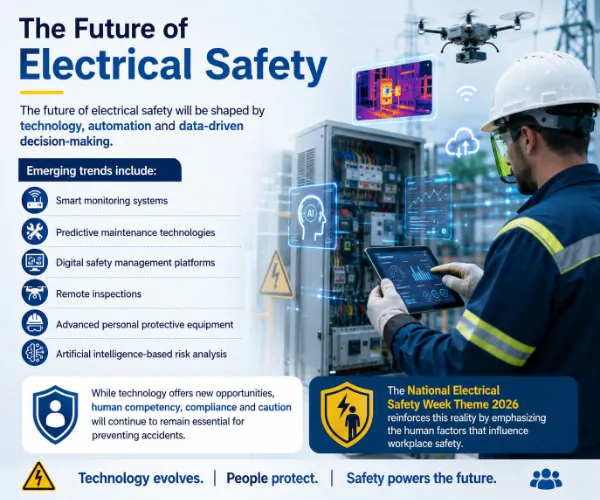
Emerging trends include:
- Smart monitoring systems
- Predictive maintenance technologies
- Digital safety management platforms
- Remote inspections
- Advanced personal protective equipment
- Artificial intelligence-based risk analysis
While technology offers new opportunities, human competency, compliance and caution will continue to remain essential for preventing accidents.
The National Electrical Safety Week Theme 2026 reinforces this reality by emphasizing the human factors that influence workplace safety.
Conclusion
The National Electrical Safety Week Theme 2026, “Competency, Compliance and Caution: Ensuring Electrical Safety,” highlights the fundamental elements required to create safer workplaces and reduce electrical hazards.
Competency ensures that personnel possess the necessary knowledge and skills. Compliance guarantees adherence to regulations and standards. Caution encourages continuous vigilance and responsible behavior while working around electrical systems.
As industries continue to evolve organizations must invest in training, strengthen compliance programs and foster a culture of caution. By embracing the principles outlined in the National Electrical Safety Week Theme 2026, businesses can protect employees, improve operational performance and contribute to a safer industrial environment.
Ultimately, electrical safety is not a one-week initiative. It is an ongoing commitment that requires participation, awareness and dedication from every individual involved in electrical operations.