
World Ozone Day is observed every year on 16 September to remind people about the importance of protecting the ozone layer. The ozone layer forms a natural shield around Earth. It absorbs much of the harmful ultraviolet radiation from the sun. This protection supports human health, ecosystems, agriculture, wildlife and the overall balance of our environment.
For industries, ozone protection is closely linked to the way companies use, maintain, service and dispose of cooling equipment. Refrigerators, air conditioning systems, chillers, cold storage units and other cooling equipment may use refrigerants that can harm the ozone layer when they contain ozone-depleting substances. Poor handling can also contribute to environmental damage.
World Ozone Day 2026 provides a useful opportunity for industries to review their cooling practices. The theme “Global Action for a Cooler Planet” highlights the need for practical action that supports both environmental protection and sustainable cooling. Industries can contribute by selecting safer refrigerants, preventing refrigerant leakage, improving equipment efficiency, training workers, maintaining records and following applicable environmental requirements.
Understanding the Ozone Layer and Its Importance
The ozone layer is a region of the stratosphere that contains a high concentration of ozone molecules. It absorbs a major part of the sun’s harmful ultraviolet radiation before it reaches the Earth’s surface. Excessive exposure to UV radiation can affect human health, crops, forests, marine life and natural ecosystems.
The protection of the ozone layer became a major global environmental priority after scientists identified the harmful effects of substances such as chlorofluorocarbons. These substances were widely used in refrigeration, air conditioning, aerosol products, foam production and other industrial applications.

Global efforts have helped reduce the use of many ozone-depleting substances. The Montreal Protocol has played a major role in this progress. However, industries still need to manage existing equipment, refrigerants, replacement activities, servicing operations and waste responsibly.
For industrial organisations, ozone protection is not only an environmental responsibility. It also supports better equipment management, improved energy performance, safer maintenance practices and stronger environmental compliance.
How Industrial Activities Can Affect the Ozone Layer
Industrial cooling systems can become an environmental concern when they use refrigerants that damage the ozone layer. Leakage can occur through damaged pipes, loose connections, faulty valves, worn seals, poor installation or incorrect servicing. Refrigerant may also escape during equipment replacement or disposal if workers do not recover it properly.
Some older cooling systems may still contain substances that have environmental impacts. Industries should identify the refrigerants used in their equipment before planning maintenance, replacement or disposal activities. This simple step can help organisations understand their environmental responsibilities.
Poor maintenance can increase refrigerant losses. It can also reduce equipment performance. When a cooling system loses refrigerant, it may need to work harder to maintain the required temperature. This can increase energy consumption while also creating avoidable environmental risks.
Industries should therefore treat refrigerant management as an important part of their environmental management system. Proper planning can reduce emissions, improve equipment performance, control operating costs and support responsible resource use.
Use Ozone-Friendly Refrigerants and Technologies
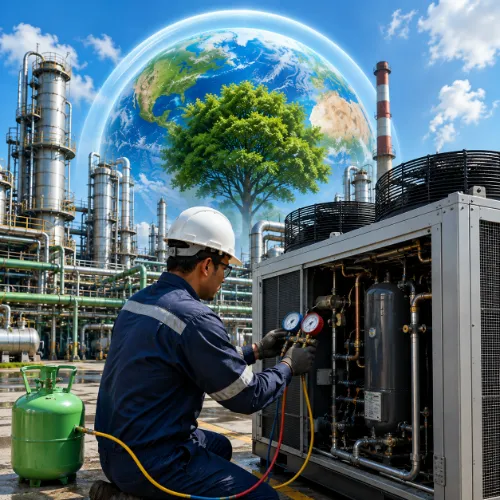
One of the most practical steps industries can take is to select refrigerants that have lower environmental impact. Organisations should consider ozone protection, climate impact, energy efficiency, equipment compatibility, safety requirements and applicable regulations when selecting cooling technologies.
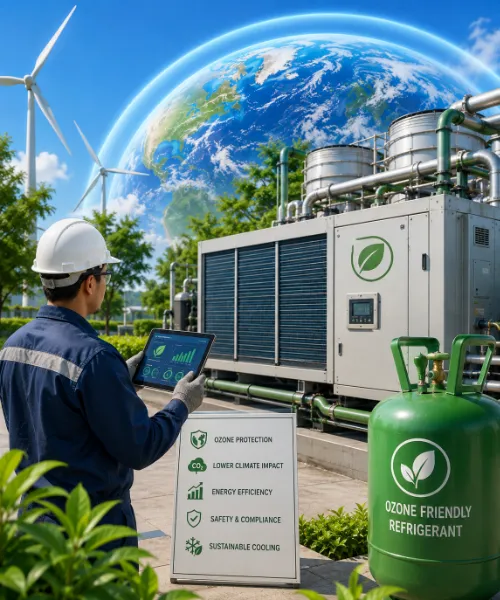
Modern cooling systems can provide better environmental performance when organisations select suitable refrigerants and efficient equipment. However, simply replacing one refrigerant is not enough. Companies should evaluate the complete lifecycle of cooling equipment, including installation, operation, maintenance, refrigerant recovery and final disposal.
Before purchasing new equipment organisations can review the refrigerant type, energy performance, maintenance requirements and environmental characteristics of the system. This approach supports Sustainable Cooling in Industries by combining environmental responsibility with efficient industrial operations.
A well-planned technology selection process can also reduce future maintenance problems. It can help organisations avoid unnecessary refrigerant losses while improving the long-term performance of their cooling systems.
Prevent Refrigerant Leakage
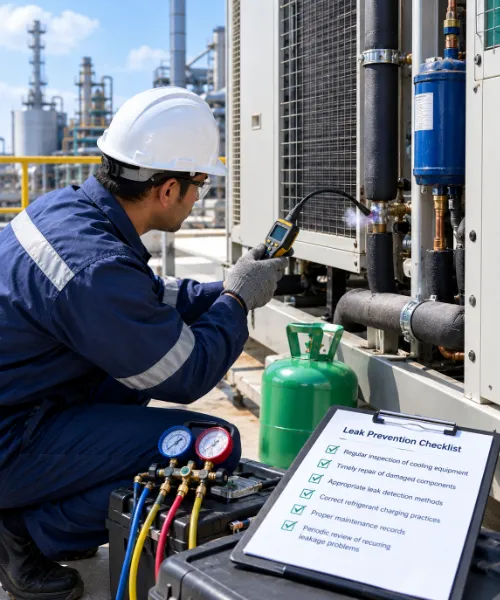
Refrigerant leakage is one of the key issues that industries should address. Even a small leak can become a significant problem if the equipment continues operating for a long period. Regular inspection helps organisations identify problems before they become larger environmental or operational issues.
Maintenance teams should inspect cooling systems at suitable intervals. They should check pipes, joints, valves, seals, connections and other components that may develop leaks. Suitable leak detection methods should be used based on the equipment and refrigerant involved.
Industries should also respond quickly when they identify leakage. Delayed repairs can increase refrigerant loss, reduce cooling performance and increase energy use. Maintenance personnel should follow safe procedures during inspection, repair, charging and servicing activities.
A simple leak prevention programme can include:
- Regular inspection of cooling equipment
- Timely repair of damaged components
- Appropriate leak detection methods
- Correct refrigerant charging practices
- Proper maintenance records
- Periodic review of recurring leakage problems
Leak prevention supports both environmental performance and reliable industrial operations.
Ensure Proper Recovery and Disposal of Refrigerants
Refrigerants should never be released intentionally into the atmosphere during maintenance, replacement or disposal of cooling equipment. Industries should use appropriate recovery procedures before removing refrigerants from equipment.
Maintenance personnel should use suitable recovery equipment and follow safe handling procedures. Recovered refrigerant should be stored, identified and managed according to applicable requirements. Organisations should also select competent service providers for specialised refrigeration work.
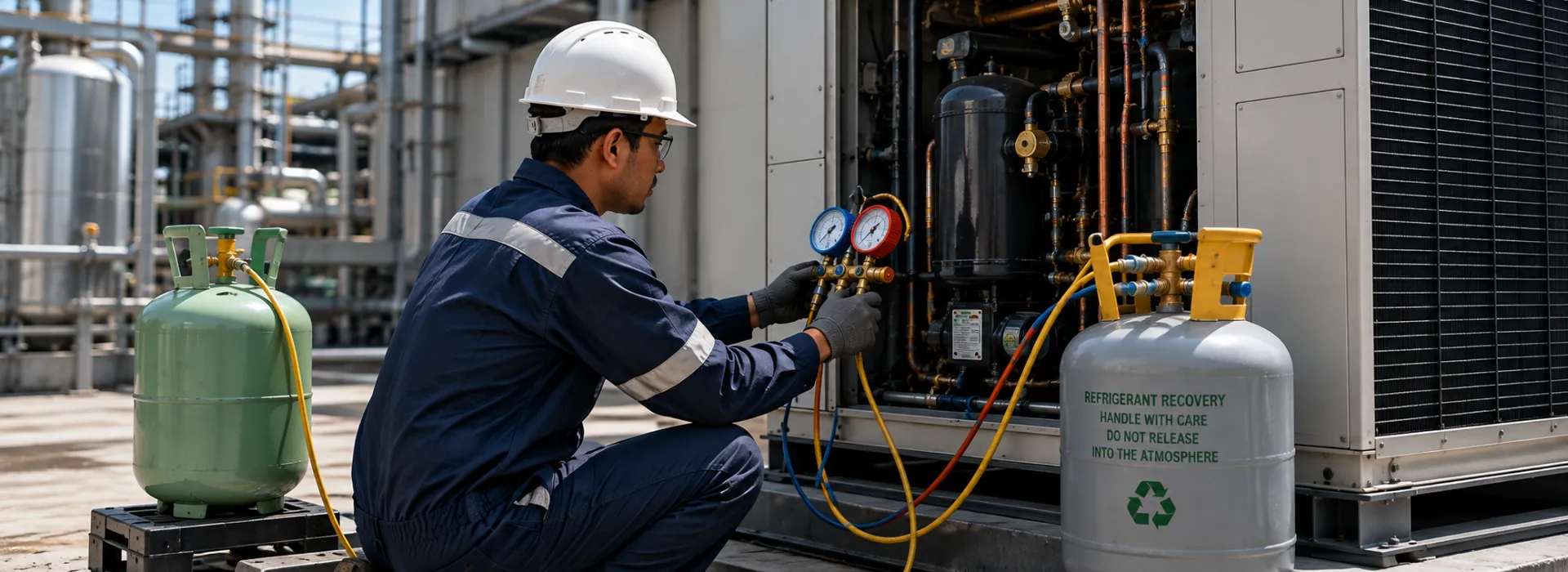
When old equipment reaches the end of its useful life, the organisation should consider the complete disposal process. Refrigerant recovery should form part of the decommissioning plan. Components should also move through appropriate waste management channels.
Responsible recovery helps prevent uncontrolled emissions. It also creates better control over refrigerant use across the organisation.
Improve Energy Efficiency in Cooling Systems
Ozone protection should not be viewed separately from energy efficiency. Cooling systems can consume a significant amount of electricity in industrial facilities. Efficient equipment can reduce energy demand while supporting reliable temperature control.
Industries can improve cooling performance through proper equipment sizing, regular cleaning, correct temperature settings, preventive maintenance, insulation checks, efficient operating practices and timely replacement of inefficient equipment.
Workers should avoid unnecessary operation of cooling systems. Doors of cold rooms should remain closed when not in use. Airflow should remain unobstructed. Equipment should operate at suitable temperature settings based on process requirements.
These simple actions can improve system performance. They also support Sustainable Cooling in Industries by reducing energy consumption while maintaining the required cooling conditions.
Energy efficiency also supports climate action because lower electricity consumption can reduce indirect greenhouse gas emissions, depending on the electricity source.
Ozone Layer Safety Awareness Videos
Train Employees and Maintenance Personnel
Technology alone cannot ensure responsible refrigerant management. Employees need clear instructions about the environmental risks linked to cooling systems. Maintenance personnel require practical training on safe refrigerant handling, leak detection, recovery procedures, equipment maintenance and emergency response.
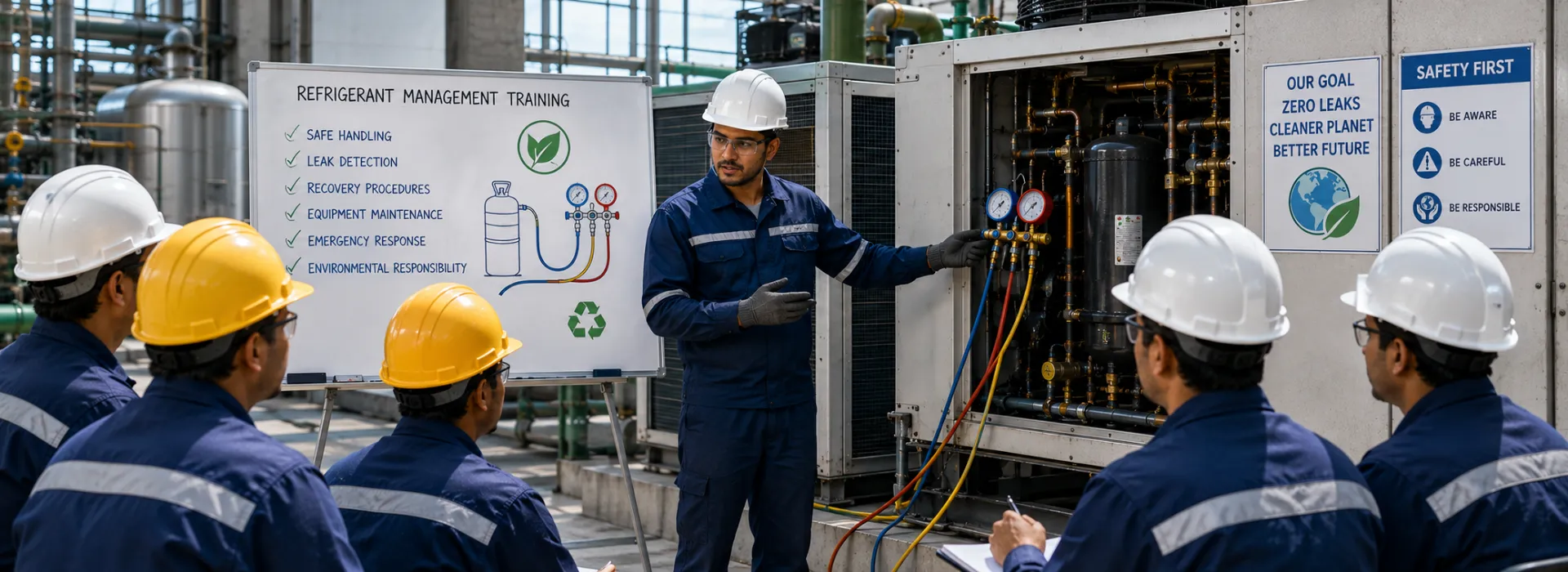
Training should match the responsibilities of different workers. Operators may need basic awareness about equipment use and abnormal conditions. Maintenance teams may require more detailed technical training. Supervisors should understand inspection requirements, records and compliance responsibilities.
Regular awareness sessions can help employees understand why refrigerant leakage should never be ignored. Workers should also know whom to contact when they identify damaged equipment, unusual cooling performance or possible leakage.
A trained workforce can reduce operational mistakes. It can also support a stronger environmental culture across the workplace.
Maintain Records and Ensure Regulatory Compliance
Good recordkeeping helps industries understand their refrigerant management activities. Organisations should maintain relevant information about cooling equipment, refrigerant types, quantities, servicing activities, leakage incidents, recovery activities and equipment disposal, based on applicable requirements.
Records can help EHS teams identify recurring problems. They can also support internal audits, inspections, environmental reporting and compliance reviews.
Industries should identify the environmental laws, rules, standards and other requirements applicable to their operations. Requirements may vary based on the type of refrigerant, equipment, activity, location and regulatory framework.
Compliance should not become a one-time activity. Organisations should review their legal requirements regularly, track changes, update internal procedures and communicate relevant changes to responsible personnel.
Promote Sustainable Cooling Practices Across the Workplace
Sustainable cooling requires action across the entire organisation. The EHS team can coordinate environmental requirements, while engineering and maintenance teams can manage equipment performance. Procurement teams can consider environmental factors during equipment selection. Employees can support responsible operation through everyday practices.
Organisations can also include cooling performance in their environmental objectives. They can monitor refrigerant consumption, leakage incidents, energy use and maintenance trends. This information can help management identify improvement opportunities.
Simple workplace practices can make a meaningful difference. Keeping equipment clean, maintaining proper insulation, preventing unnecessary door opening, checking operating conditions, reporting faults quickly and avoiding uncontrolled refrigerant release can support better cooling performance.
The goal should be to create a workplace where environmental protection becomes part of normal operations rather than an activity performed only during special campaigns.
What Can Industries Do This World Ozone Day?
World Ozone Day 2026 can serve as a practical starting point for organisations that want to strengthen their environmental programmes. Industries can use the day to review existing cooling systems, identify risks and create realistic improvement actions.
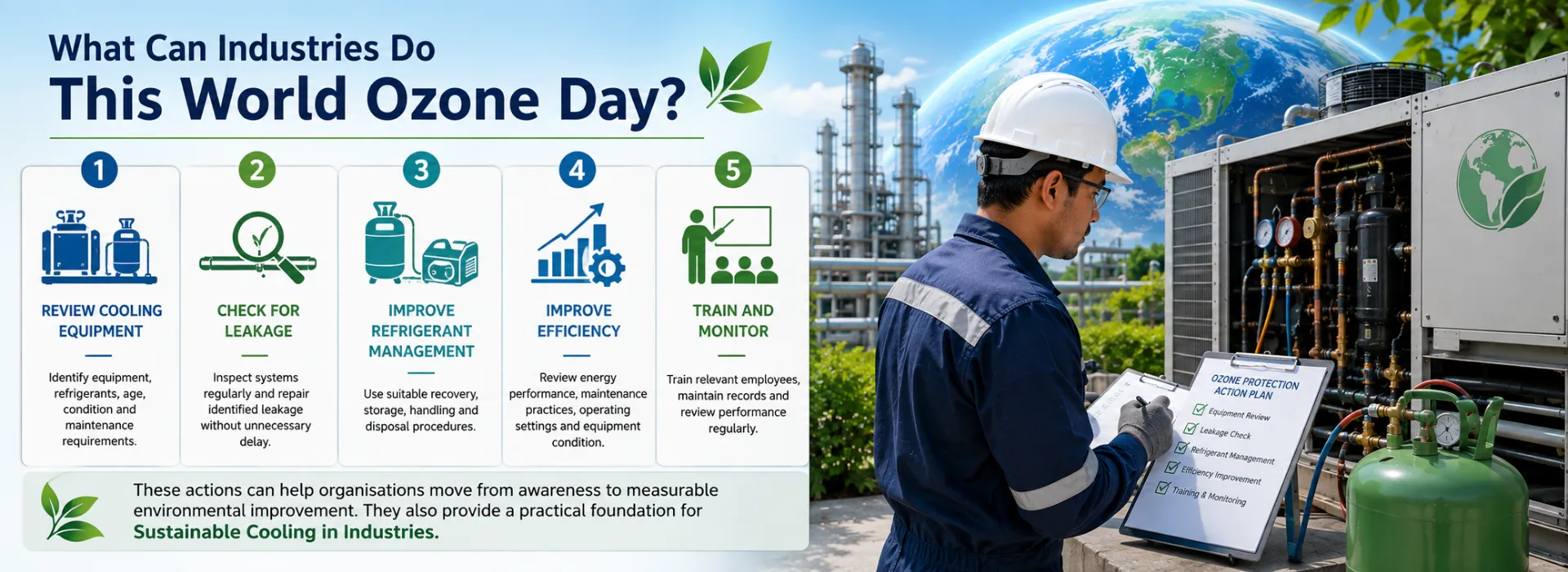
A simple five-step approach can help:
- Review cooling equipment: Identify equipment, refrigerants, age, condition and maintenance requirements.
- Check for leakage: Inspect systems regularly and repair identified leakage without unnecessary delay.
- Improve refrigerant management: Use suitable recovery, storage, handling and disposal procedures.
- Improve efficiency: Review energy performance, maintenance practices, operating settings and equipment condition.
- Train and monitor: Train relevant employees, maintain records and review performance regularly.
These actions can help organisations move from awareness to measurable environmental improvement. They also provide a practical foundation for Sustainable Cooling in Industries.
Protect the Ozone Layer: Act Today for a Cooler and Sustainable Tomorrow
Protecting the ozone layer requires continuous action. Industries can make a meaningful contribution through responsible refrigerant management, efficient cooling technologies, regular maintenance, employee training and effective compliance management.
World Ozone Day 2026 is more than an annual awareness event. It is an opportunity for organisations to examine how their daily activities affect the environment. Small operational improvements can create long-term benefits when companies apply them consistently.
For EHS and environmental professionals, the focus should remain practical. Identify the risks. Control refrigerant losses. Improve equipment efficiency. Train people. Maintain proper records.
Five Actions for EHS and Environmental Professionals
- Review refrigerants used across the facility.
- Strengthen leak detection and preventive maintenance.
- Verify proper recovery before equipment disposal.
- Train employees involved in cooling system operations.
- Monitor environmental performance and compliance requirements.
Sustainable Cooling in Industries can help organisations connect ozone protection, efficient operations and responsible environmental management. By taking practical steps today, industries can support a healthier atmosphere and contribute to a cooler, more sustainable future.