Mental health is an important part of our overall health. It affects how we think, feel, communicate, make decisions and respond to everyday challenges. For many people, work takes up a major part of their daily life. Therefore, the workplace can have a strong influence on mental wellbeing.
A healthy workplace should not only protect employees from physical hazards. It should also create an environment where people feel respected, supported and comfortable speaking about their concerns. This is why Workplace Mental Health has become an important part of creating safer and healthier organizations.
World Mental Health Day 2026 provides an opportunity to look beyond awareness and focus on something more meaningful: listening to people’s real experiences and using those experiences to create positive change.
What Is World Mental Health Day?

World Mental Health Day is observed every year on 10 October to raise awareness about mental health and encourage action to support mental wellbeing.
The day brings attention to mental health issues across communities, workplaces and society. It encourages people to understand mental health, reduce stigma and recognize the importance of seeking support when needed.
Mental health affects people at every stage of life. Employees may experience stress because of workload, deadlines, workplace relationships or changes in their personal lives. When organizations understand these challenges, they can take practical steps to create healthier working environments.
For employers, World Mental Health Day is not simply an awareness event. It can also be a reminder to review how employees experience their workplace and whether existing support systems actually meet their needs.
Mental health deserves the same attention as physical health.
Understanding the 2026 Theme
The theme for World Mental Health Day 2026 is: “Lived experiences heard: Real voices, real change”
The theme places people’s real experiences at the centre of mental health awareness. Lived experience means what a person has personally experienced, including challenges, emotions, difficulties, recovery and the support they received.
In the workplace, employees may experience stress, anxiety, excessive workload, burnout, isolation, conflict or difficulty balancing professional and personal responsibilities. Their experiences can provide valuable information about what is working and what needs to change.
Listening to employees can help organizations identify problems that may not appear in reports or performance data.
The theme encourages organizations to move beyond simply asking employees how they feel. They should listen carefully, understand the underlying issues and take appropriate action.
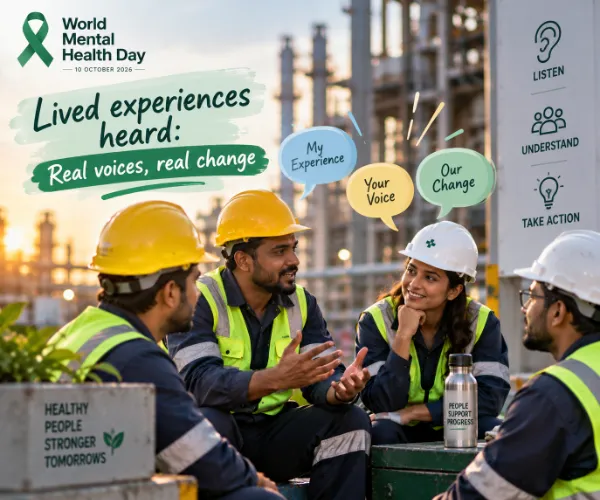
A simple approach can be:
- Listen to employee experiences.
- Understand the challenges behind those experiences.
- Identify workplace factors that may contribute to stress.
- Support employees appropriately.
- Act on issues that need improvement.
- Review whether the changes are working.
Real change begins when listening leads to action.
Why Mental Health Matters
Good mental health helps people manage everyday challenges and maintain healthy relationships. At work, it can support concentration, communication, decision-making, teamwork and productivity.
However, good Workplace Mental Health does not mean that employees will never experience stress or difficult emotions. Work can naturally involve pressure, deadlines and challenging situations. The goal is to create an environment where employees can manage these demands and access appropriate support when difficulties become significant.
Organizations also benefit when they take mental health seriously. Employees who feel supported are more likely to communicate openly, participate in their work and contribute positively to their teams.
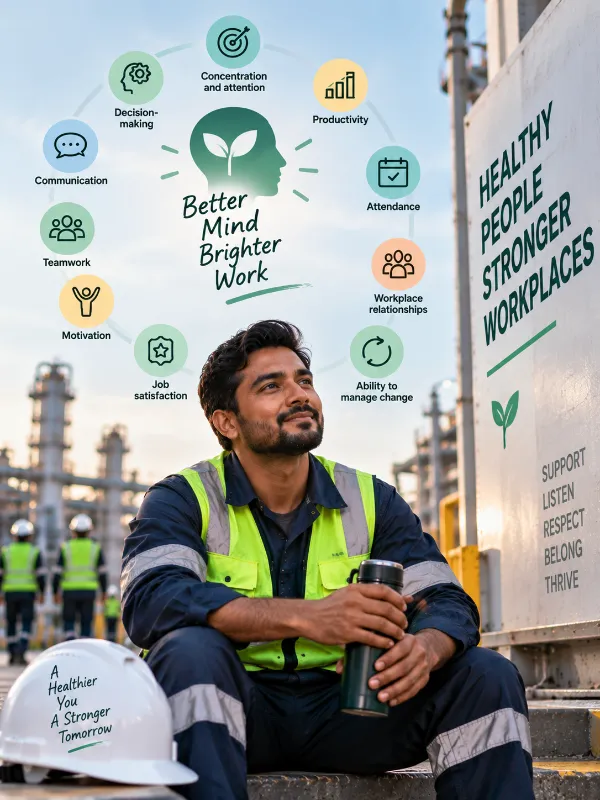
Mental wellbeing can influence:
- Concentration and attention
- Decision-making
- Communication
- Teamwork
- Motivation
- Job satisfaction
- Productivity
- Attendance
- Workplace relationships
- Ability to manage change
A workplace that supports mental health can also help employees recognize concerns earlier and seek support before problems become more difficult to manage.
Mental Health at the Workplace
The workplace can support mental wellbeing, but it can also create conditions that increase stress when risks are not properly managed.
High workloads, unrealistic deadlines, unclear responsibilities, poor communication, lack of control over work and workplace conflict can affect employee wellbeing. Personal circumstances can also influence how an employee responds to workplace demands.
This is why organizations should consider Workplace Mental Health as part of their wider health, safety and wellbeing approach.
Employers should look at both the individual and the working environment. Simply telling employees to “manage stress better” does not address workplace factors that may be contributing to the problem.
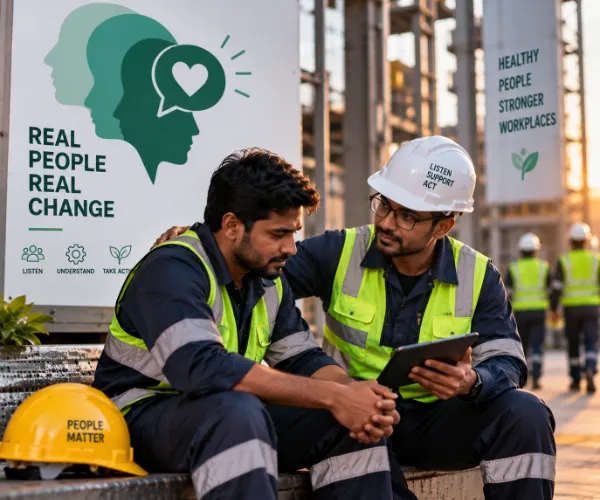
Organizations should ask:
- Are workloads reasonable?
- Do employees understand their responsibilities?
- Can employees raise concerns safely?
- Do managers communicate effectively?
- Do employees receive appropriate support?
- Are workplace conflicts addressed?
- Do employees have sufficient opportunities for rest and recovery?
- Are psychosocial risks identified and managed?
What Happens When Mental Health Is Neglected?
When mental health concerns remain unnoticed or unsupported, employees may face difficulties in both their personal and professional lives.
Work-related stress can affect concentration, sleep, motivation and relationships. Over time, continued pressure without adequate support can contribute to emotional exhaustion and burnout.
Employees may also hesitate to talk about their struggles because they fear judgment, discrimination or negative consequences at work. This can make the situation more difficult.
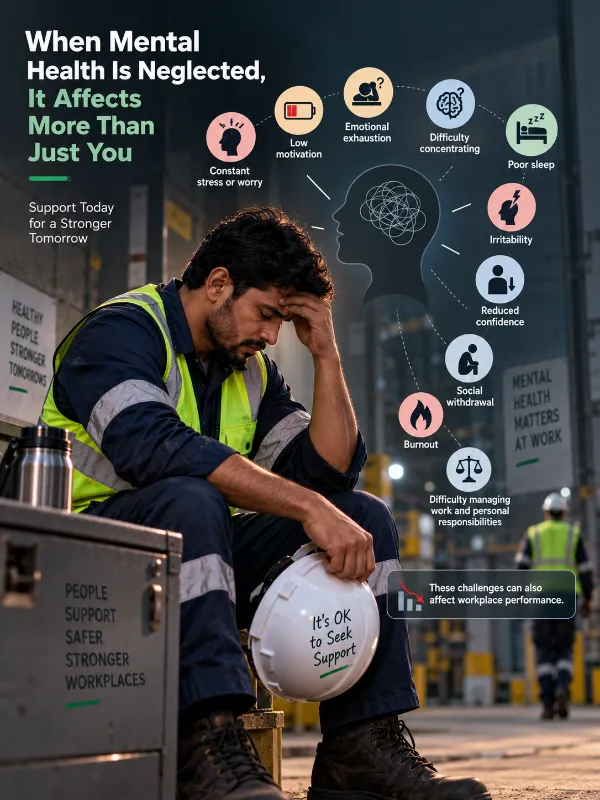
Employees may experience:
- Constant stress or worry
- Emotional exhaustion
- Low motivation
- Difficulty concentrating
- Poor sleep
- Irritability
- Reduced confidence
- Social withdrawal
- Burnout
- Difficulty managing work and personal responsibilities
These challenges can also affect workplace performance.
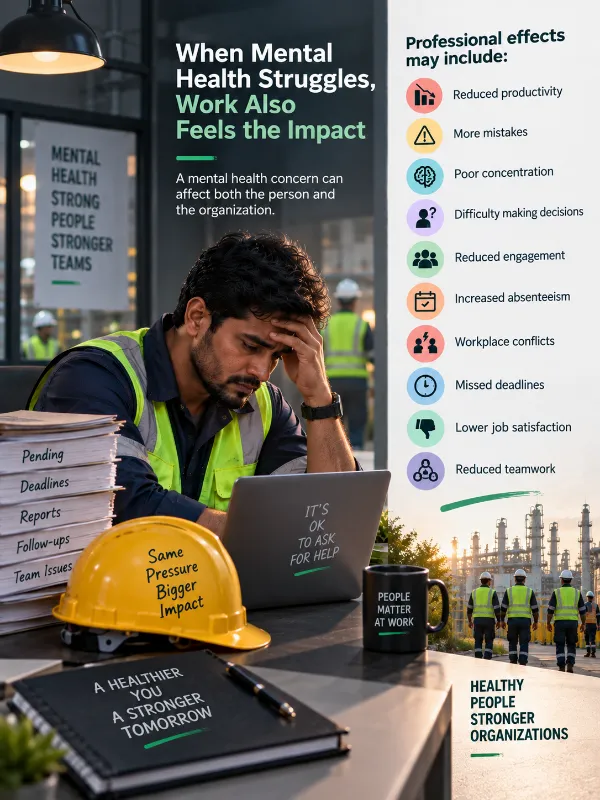
Professional effects may include:
- Reduced productivity
- More mistakes
- Poor concentration
- Difficulty making decisions
- Reduced engagement
- Increased absenteeism
- Workplace conflicts
- Missed deadlines
- Lower job satisfaction
- Reduced teamwork
A mental health concern can affect both the person and the organization.
Personal and Professional Struggles
Personal and professional life do not always remain separate. Difficulties in one area can affect the other.
An employee dealing with financial concerns, family responsibilities, relationship difficulties, grief or other personal challenges may find it harder to concentrate at work. Similarly, excessive workplace pressure can affect an employee’s sleep, relationships, mood and ability to enjoy personal time.
For example, consider a simple cycle:
Heavy workload → Stress → Poor sleep → Low concentration → More mistakes → More pressure
Another situation may look like this:
Personal difficulty → Emotional strain → Reduced focus → Lower performance → Workplace pressure
These situations do not mean that an employee lacks commitment or ability. They show why organizations need to understand the factors that influence employee wellbeing.
A supportive workplace does not try to solve every personal problem. Instead, it provides a respectful environment, recognizes workplace risks and helps employees access appropriate support.
How Can Workplace Mental Health Be Improved?
Improving Workplace Mental Health requires action from both organizations and employees. Employers should identify workplace factors that may affect wellbeing and create systems that encourage early support.
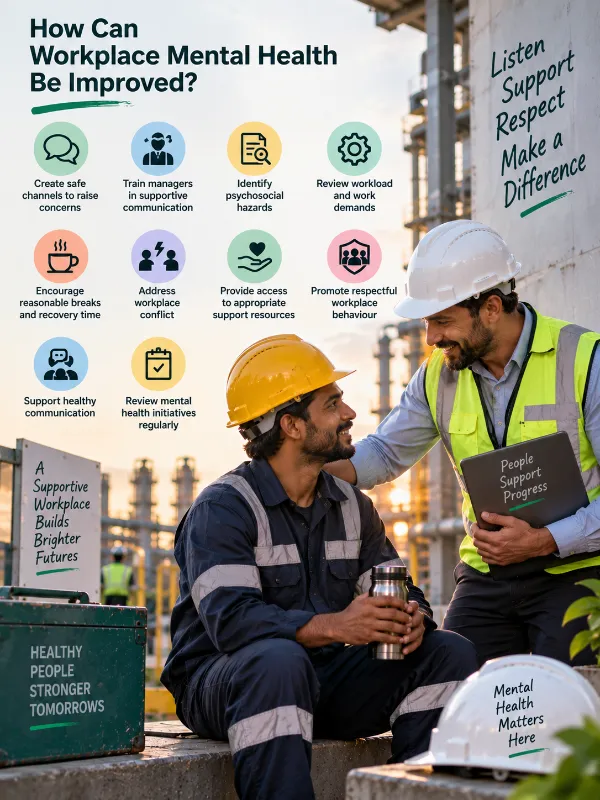
Organizations can improve mental health by:
- Creating safe channels for employees to raise concerns
- Training managers in supportive communication
- Identifying psychosocial hazards
- Reviewing workload and work demands
- Encouraging reasonable breaks and recovery time
- Addressing workplace conflict
- Providing access to appropriate support resources
- Promoting respectful workplace behaviour
- Supporting healthy communication
- Reviewing mental health initiatives regularly
Mental health support should not exist only as a written policy. Employees should know how to access it and feel comfortable using it.
Managers also play an important role. A manager who listens without immediately judging or blaming can help create a workplace where employees feel more comfortable discussing concerns.
What Can Employees Do?
Employees also have an important role in maintaining their wellbeing. They should pay attention to changes in their stress levels, mood, sleep, concentration and motivation.
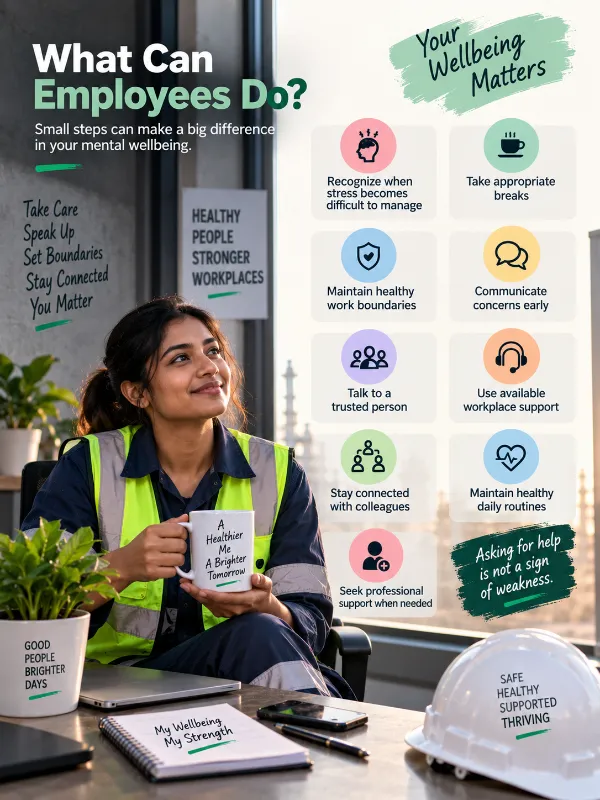
Employees can:
- Recognize when stress becomes difficult to manage
- Take appropriate breaks
- Maintain healthy work boundaries
- Communicate concerns early
- Talk to a trusted person
- Use available workplace support
- Stay connected with colleagues
- Maintain healthy daily routines
- Seek professional support when needed
Asking for help is not a sign of weakness.
The Role of Leaders and Organizations
Leaders influence workplace culture through their everyday actions. When managers encourage open communication, respect boundaries and respond appropriately to concerns, they help create a more supportive environment.
Organizations should also avoid treating every mental health concern as an individual performance problem. Sometimes, the organization needs to examine whether workplace conditions are contributing to the difficulty.

Leaders can support Workplace Mental Health by:
- Listening without judgment
- Encouraging employees to speak up
- Responding to concerns appropriately
- Recognizing excessive workloads
- Promoting respectful behaviour
- Providing suitable resources
- Taking psychosocial risks seriously
- Following up after concerns are raised
Listening without action is awareness. Listening followed by meaningful action creates change.
From Lived Experiences to Real Workplace Change
The 2026 theme gives organizations an opportunity to learn from the people who experience the workplace every day.
Employees can help organizations understand problems that may otherwise remain hidden. Their experiences can reveal gaps in communication, workload management, leadership, support systems or workplace culture.
Organizations can turn these experiences into action by using a simple cycle:
Hear the voice → Understand the experience → Identify the issue → Take action → Measure improvement
For example, if employees repeatedly report excessive workload, the solution should not simply tell employees to become more resilient. The organization should examine staffing, deadlines, work allocation and processes.
If employees report that they are afraid to speak to managers, the organization should examine its communication culture and leadership practices.
This approach turns lived experiences into practical workplace improvements.
Building a Workplace Where People Feel Heard
A mentally healthier workplace does not require perfection. It requires organizations to recognize problems, respond responsibly and keep improving.
Employees should feel that their experiences matter and that raising a concern can lead to constructive discussion rather than blame.
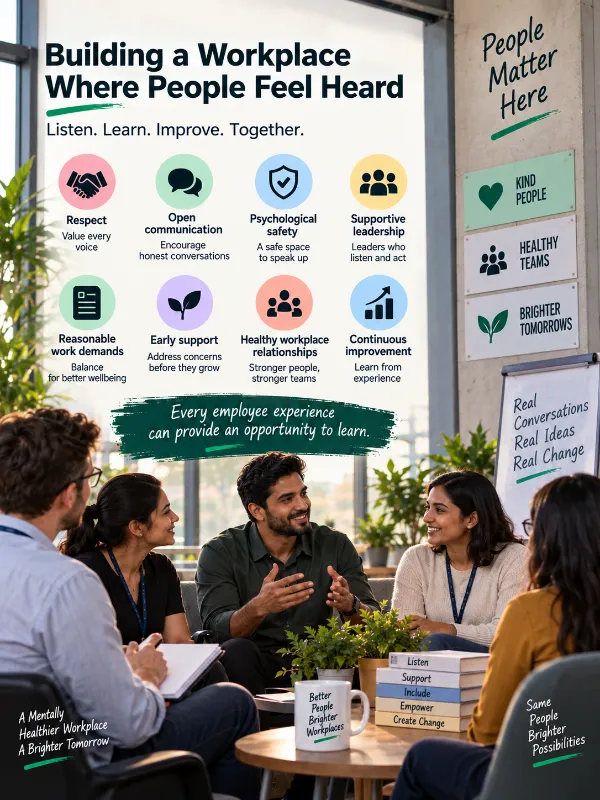
A supportive workplace should promote:
- Respect
- Open communication
- Psychological safety
- Supportive leadership
- Reasonable work demands
- Early support
- Healthy workplace relationships
- Continuous improvement
Every employee experience can provide an opportunity to learn.
Mental Health Day Videos
Conclusion: Real Voices, Real Change
World Mental Health Day 2026 reminds us that mental health needs more than awareness. It needs understanding, listening and action.
The theme “Lived experiences heard: Real voices, real change” encourages organizations to hear what employees are actually experiencing and use those insights to improve the workplace.
Workplace Mental Health is not only an employee issue. It is an organizational responsibility.
A healthier workplace begins when people feel safe enough to speak, leaders are willing to listen and organizations are prepared to act.
When real voices are heard organizations can identify real problems. When those problems receive meaningful attention, workplaces can create real change.
Listen to people. Understand their experiences. Take action. Build a healthier workplace.