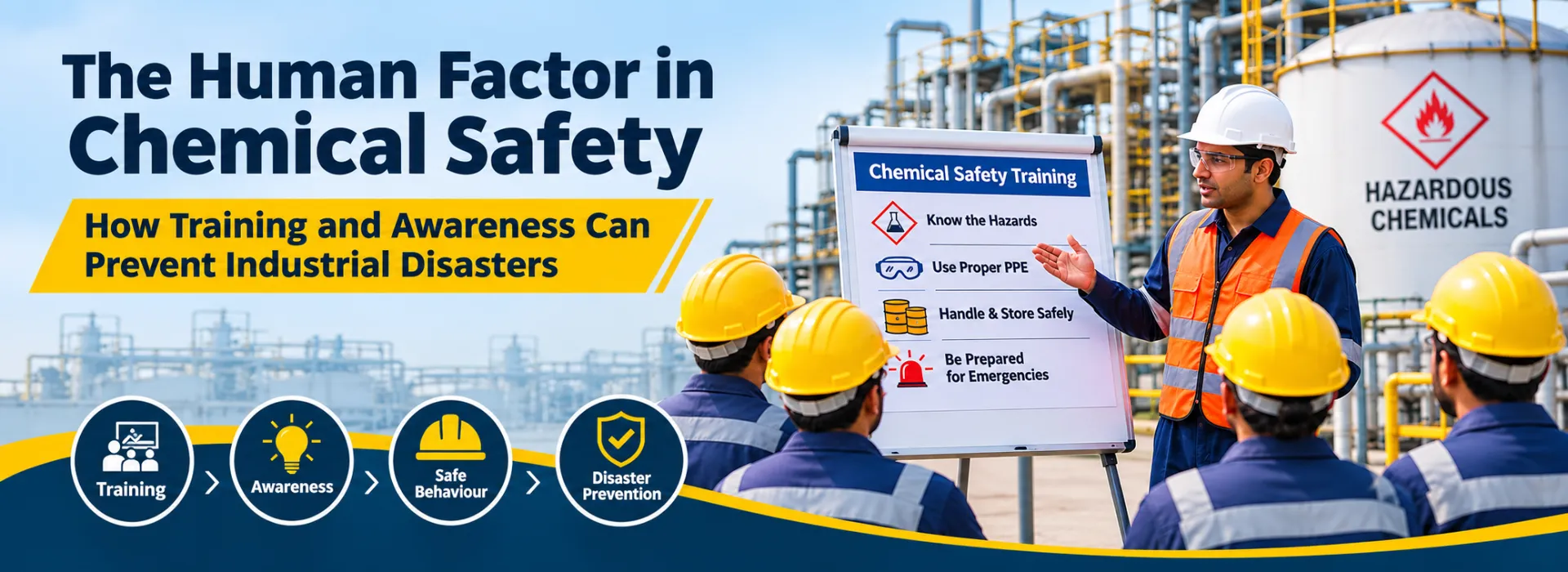
Chemical safety is a major responsibility for industries that manufacture, store, transport or use hazardous chemicals. A small mistake during chemical handling can cause serious accidents, including spills, fires, explosions, toxic gas releases, injuries and loss of life. Industries invest in advanced equipment, protective devices and emergency systems to control these risks. However, these measures cannot work effectively without employees who understand and follow safety procedures.
Human behaviour plays an important role in workplace safety. Employees handle chemicals, operate equipment, make decisions and respond to unexpected situations every day. A lack of awareness, insufficient training, poor communication or unsafe working habits can increase the risk of industrial accidents.
This makes chemical safety training and awareness essential for every organisation. Regular training helps employees understand hazards, recognise unsafe conditions, follow safe working practices and respond correctly during emergencies.
Chemical safety begins with awareness, improves through training and becomes stronger through responsible behaviour.
1. Understanding the Human Factor in Chemical Safety
The human factor in chemical safety refers to how employees’ knowledge, behaviour, decisions and actions influence workplace safety. Every person working with hazardous chemicals must understand potential risks and follow the necessary precautions to prevent accidents.
Many industrial incidents occur when employees ignore procedures, misunderstand chemical hazards or fail to recognise warning signs. For example, transferring a chemical into an unlabelled container, mixing incompatible substances or handling chemicals without suitable personal protective equipment (PPE) can create dangerous situations.
Organisations must understand that employees need proper knowledge and guidance to follow safety procedures effectively.
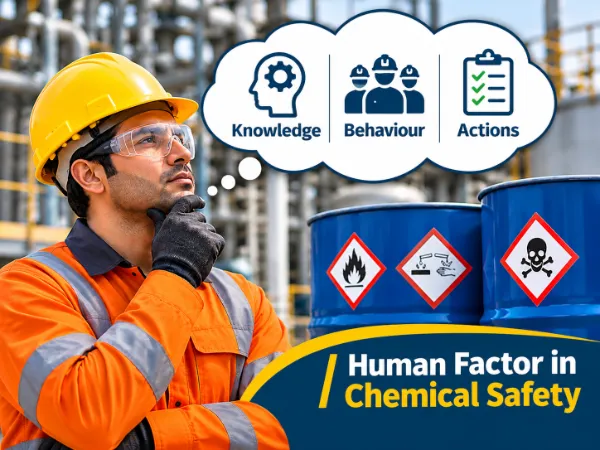
Common human-related factors that increase chemical safety risks include:
- Lack of knowledge about chemical hazards.
- Insufficient training in chemical handling and storage.
- Failure to read chemical labels and Safety Data Sheets (SDS).
- Improper use of personal protective equipment.
- Poor communication between employees and supervisors.
- Fatigue, stress and workplace pressure.
- Failure to report unsafe conditions and near-miss incidents.
2. Why Human Errors Can Lead to Chemical Disasters
Human errors can turn a manageable workplace hazard into a serious industrial accident. Employees handle different chemicals, equipment and storage systems and even a small mistake can cause unexpected reactions or harmful exposure.
For example, storing incompatible chemicals together can create dangerous reactions if containers leak. Similarly, operating electrical equipment in an atmosphere containing flammable vapours without proper precautions can create an ignition risk.
Employees may make mistakes because they lack information, receive inadequate training or work under conditions that encourage shortcuts. Organisations must identify these underlying causes instead of simply blaming individuals.
A safer workplace starts when organisations understand why unsafe actions happen and take steps to prevent them.
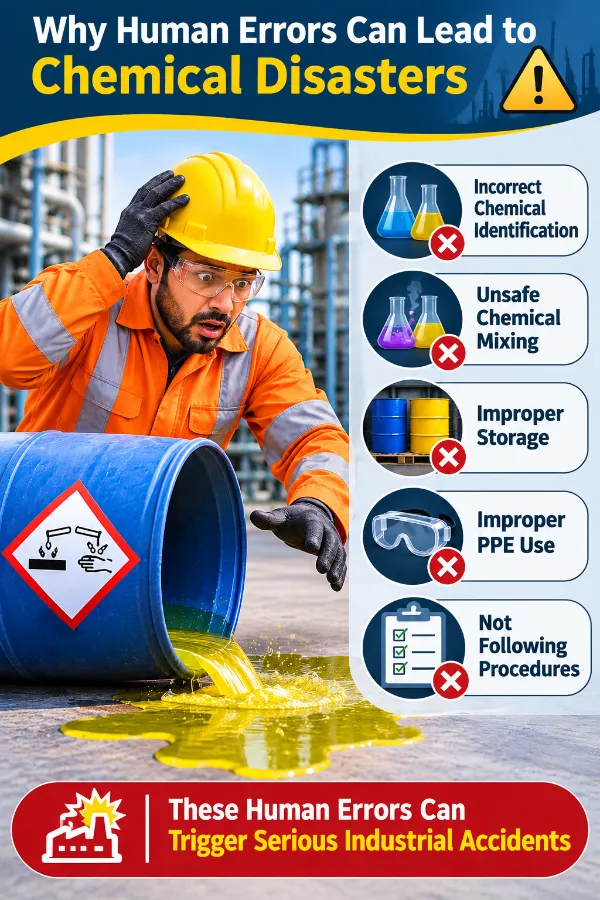
Common human errors include:
- Incorrect chemical identification: Employees may select the wrong chemical if they fail to check container labels.
- Unsafe chemical mixing: Mixing incompatible substances can produce toxic gases, heat or dangerous reactions.
- Improper storage: Incorrect storage can increase the risk of leaks, fires and chemical reactions.
- Ignoring warning signs: Employees may overlook unusual odours, leaking containers or damaged equipment.
- Improper PPE use: Unsuitable or incorrectly used protective equipment can increase chemical exposure.
- Failure to follow procedures: Skipping safety checks and taking shortcuts can increase operational risks.
- Delayed emergency response: Employees without emergency training may respond incorrectly during an incident.
3. The Importance of Chemical Safety Training in Industries
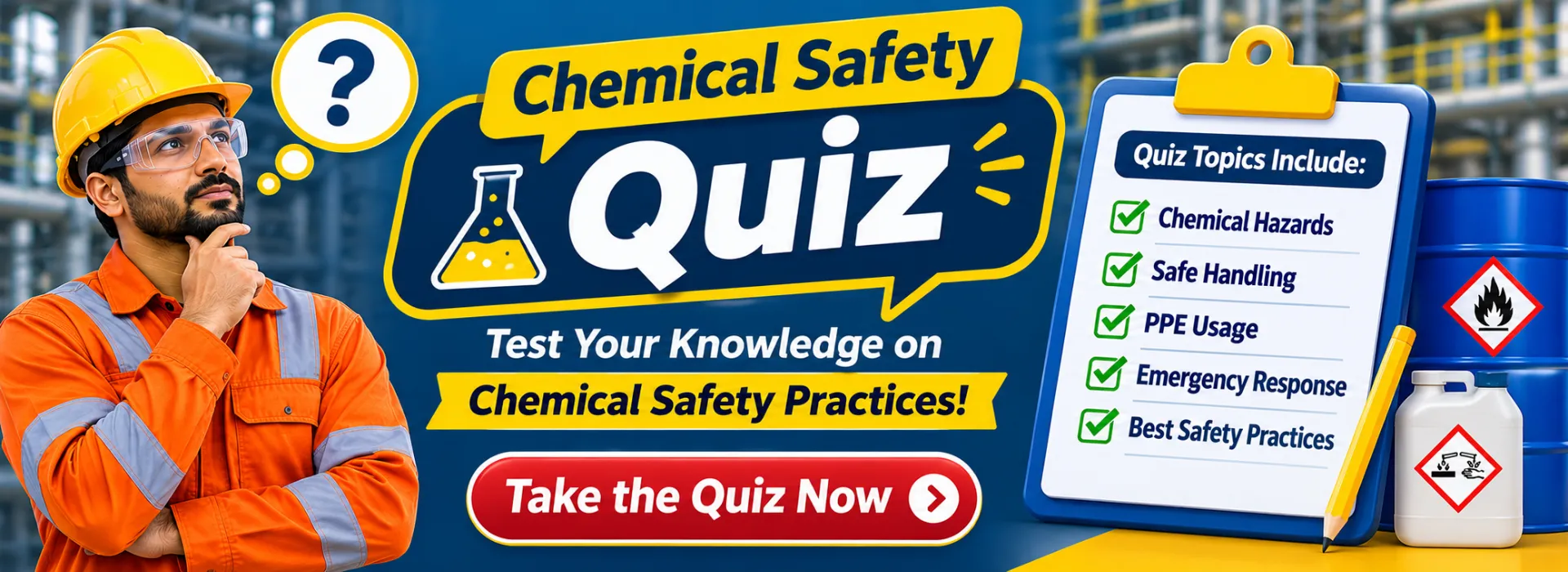
Chemical safety training helps employees understand workplace hazards and perform their duties safely. It provides practical knowledge about chemical identification, safe handling, protective equipment and emergency response.
Training should not remain a one-time activity. Organisations must provide regular training whenever they introduce new chemicals, change processes, update procedures or identify new workplace risks.
A proper chemical safety training programme should cover these important areas.
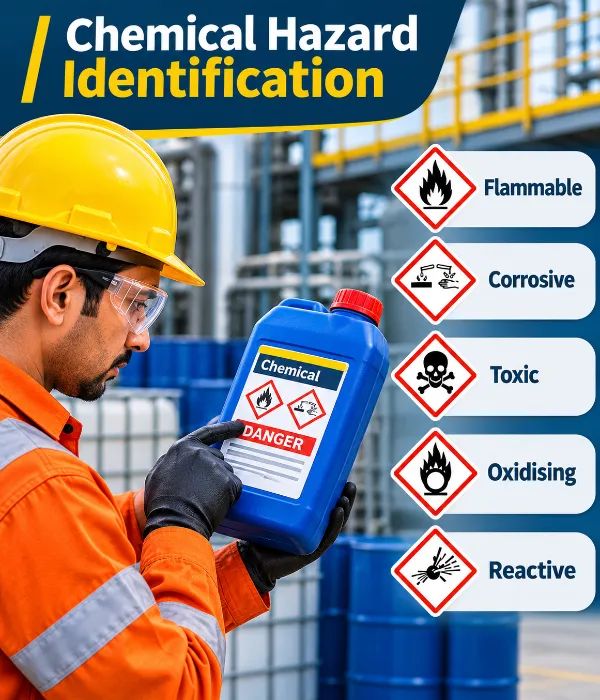
A. Chemical Hazard Identification
Employees must understand chemical hazard classifications, warning symbols, container labels and possible exposure routes.
Training should cover:
- Flammable substances.
- Corrosive chemicals.
- Toxic and harmful substances.
- Oxidising agents.
- Reactive and explosive substances.
- Chemicals that cause skin or respiratory irritation.
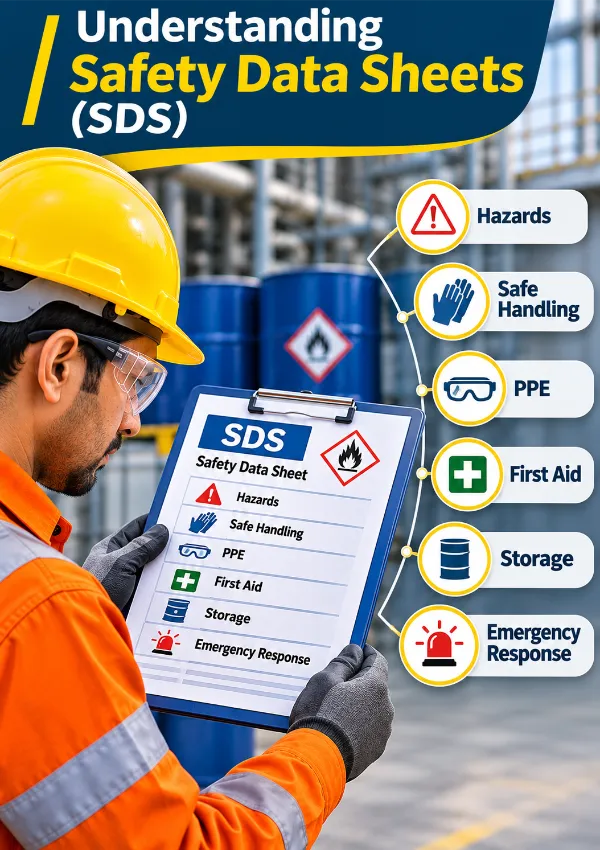
B. Understanding Safety Data Sheets (SDS)
A Safety Data Sheet provides important information about chemical properties, hazards, handling, storage, exposure controls and emergency measures.
Employees should know how to locate and understand relevant SDS information, including:
- Chemical identification and hazards.
- First-aid measures.
- Firefighting measures.
- Accidental release measures.
- Safe handling and storage.
- Exposure controls and personal protection.
- Stability and reactivity.
- Toxicological information.
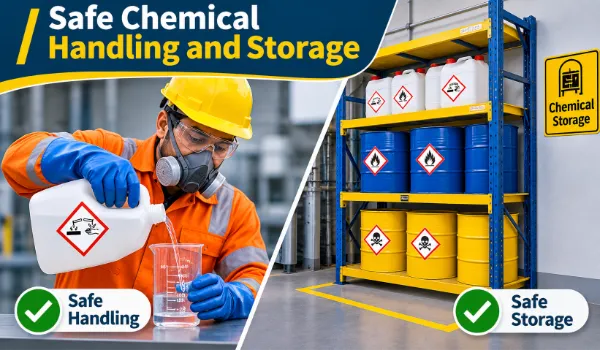
C. Safe Chemical Handling and Storage
Employees must follow approved procedures while handling, transferring and storing chemicals. Training should teach them to check labels, use approved containers, separate incompatible chemicals, follow handling instructions and report damaged or leaking containers immediately.
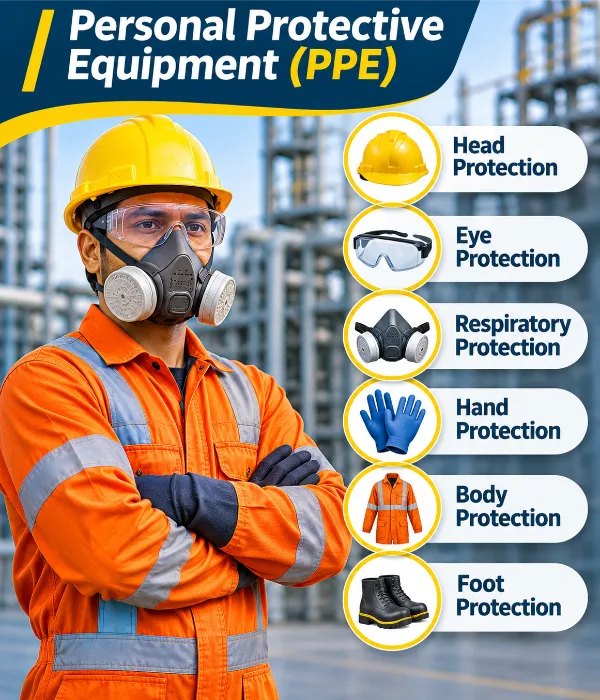
D. Personal Protective Equipment (PPE)
Different chemicals require different types of protection. Employees must understand how to select, wear, inspect, clean and store PPE correctly.
Depending on the workplace risk assessment, PPE may include:
- Chemical-resistant gloves.
- Safety goggles or face shields.
- Chemical-resistant clothing.
- Suitable safety footwear.
- Respiratory protective equipment.
4. How Awareness Programmes Improve Chemical Safety
Training provides knowledge, while awareness programmes encourage employees to apply that knowledge during daily activities. Regular safety communication helps employees recognise hazards and remember important precautions.
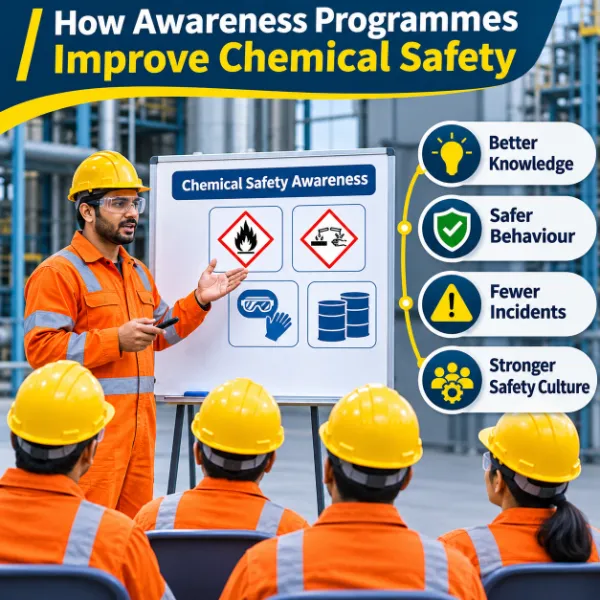
Organisations can improve chemical safety awareness through:
- Toolbox talks: Discuss chemical hazards and safe working practices during regular shift meetings.
- Safety posters: Display clear safety messages near chemical storage and handling areas.
- Mock drills: Practise evacuation, emergency communication and response procedures.
- Safety campaigns: Organise awareness activities on chemical handling, spill prevention and PPE.
- Near-miss reporting: Encourage employees to report unsafe conditions before accidents occur.
- Visual learning: Use videos, presentations and infographics to explain important safety information.
Safety awareness should become a regular workplace practice rather than an activity limited to annual training sessions.
5. Building a Strong Chemical Safety Culture Through Employee Participation
A strong chemical safety culture develops when management and employees work together to prevent accidents. Management must provide training, equipment, resources and supervision, while employees must follow procedures and report unsafe conditions.
Organisations should encourage employees to share safety concerns without fear of unfair punishment. Open communication helps management identify problems and take corrective action before incidents occur.
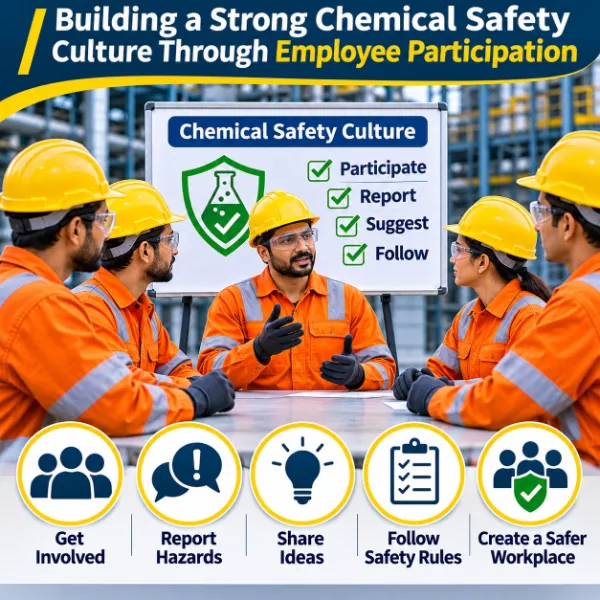
Employee participation can strengthen chemical safety through:
- Participation in workplace hazard identification.
- Involvement in safety inspections and risk assessments.
- Regular discussions about chemical safety concerns.
- Suggestions for improving existing safety procedures.
- Timely reporting of spills, leaks and near-miss incidents.
- Sharing lessons learned from previous accidents.
Supervisors should also demonstrate safe working practices, correct unsafe behaviour and ensure that employees understand their responsibilities.
6. The Role of Emergency Preparedness and Response Training
Even with proper preventive measures organisations must prepare for unexpected chemical emergencies. Spills, fires, explosions and toxic gas releases can develop quickly, so employees must understand how to respond safely.
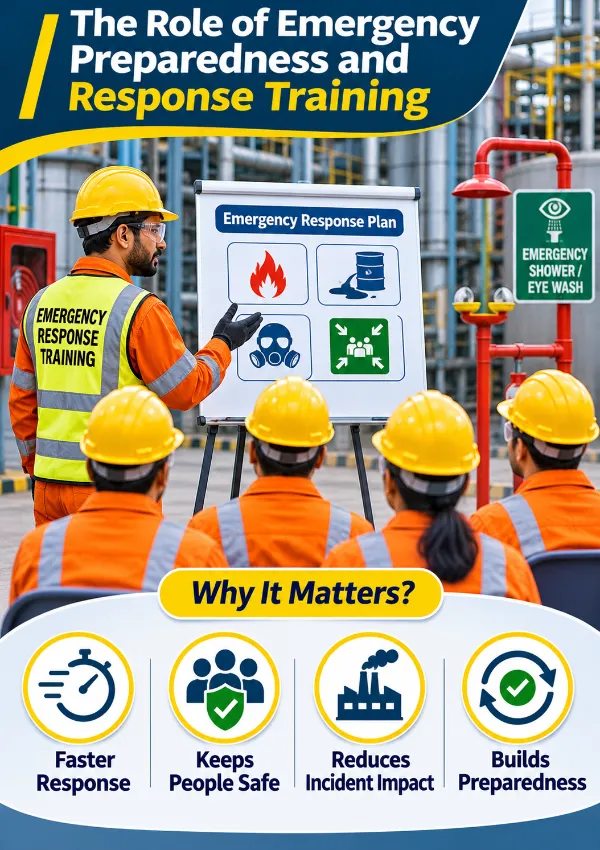
Emergency response training should teach employees to:
- Recognise emergency alarms and warning signals.
- Identify emergency exits and assembly points.
- Inform supervisors and emergency response teams.
- Follow evacuation instructions.
- Avoid entering contaminated or restricted areas.
- Use emergency equipment only when trained and authorised.
- Follow approved chemical spill response procedures.
- Locate emergency showers and eyewash stations.
- Provide relevant information to emergency responders.
During a chemical emergency, the right response can protect lives.
Regular mock drills help organisations evaluate employee preparedness, identify communication gaps and improve emergency response arrangements.
7. How Organisations Can Reduce Human Errors in Chemical Handling
Preventing human errors requires more than asking employees to be careful. Organisations must create working conditions that support safe behaviour and reduce the possibility of mistakes.
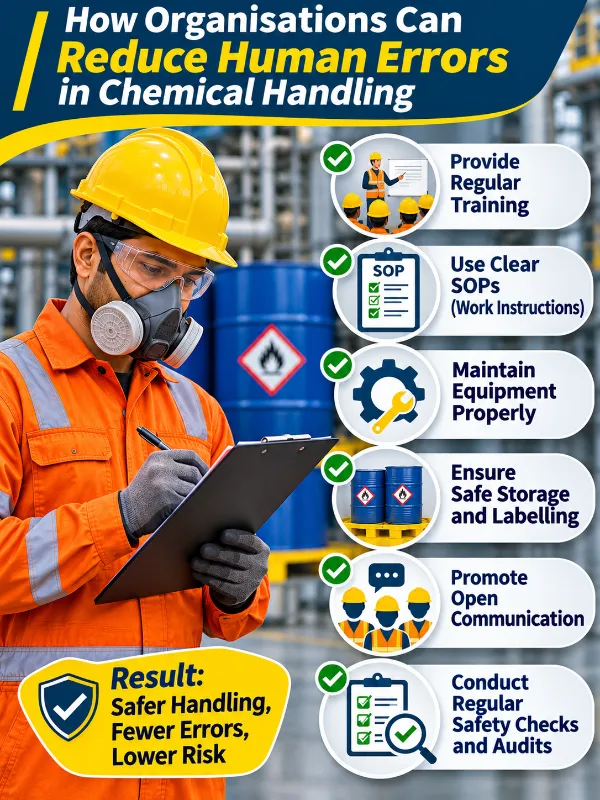
Here are seven practical steps:
- Provide job-specific training: Train employees according to the chemicals they handle and their responsibilities.
- Simplify safety procedures: Use clear instructions, visual signs and easy-to-understand operating procedures.
- Conduct regular inspections: Check chemical storage areas, containers, pipelines and emergency facilities.
- Improve communication: Share safety alerts, procedure changes and chemical hazard information promptly.
- Monitor employee competency: Evaluate whether employees can apply their training correctly.
- Encourage near-miss reporting: Identify workplace weaknesses before they cause serious incidents.
- Update training regularly: Revise training materials whenever chemicals, equipment, processes or procedures change.
8. Measuring the Effectiveness of Chemical Safety Training
Providing training does not automatically guarantee safer behaviour. Organisations must evaluate whether employees understand the information and apply it during their daily activities.
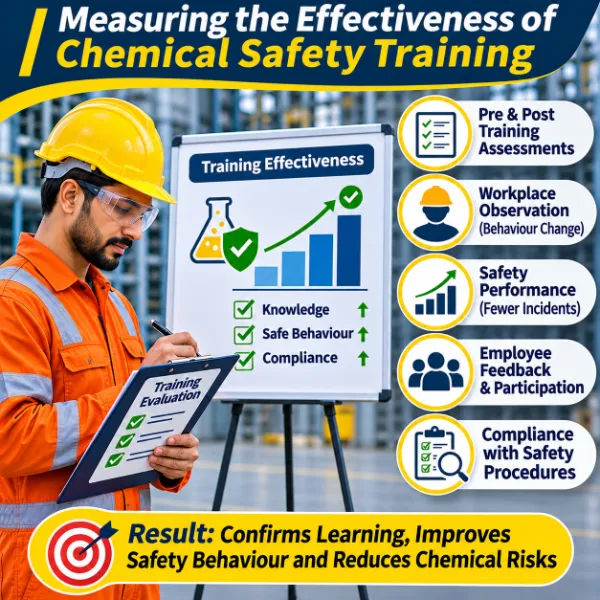
Training effectiveness can be measured through:
- Knowledge assessments: Conduct quizzes and written tests.
- Practical demonstrations: Check employees’ chemical handling and PPE skills.
- Workplace observations: Identify unsafe practices during routine activities.
- Mock drill evaluations: Review employee response and evacuation procedures.
- Incident analysis: Examine accident and near-miss trends.
- Employee feedback: Understand whether training materials are clear and useful.
Organisations should use these findings to identify knowledge gaps and continuously improve their training programmes.
9. Common Chemical Safety Mistakes Every Employee Should Avoid
Employees sometimes become familiar with routine activities and start overlooking potential hazards. This familiarity can encourage shortcuts and unsafe behaviour.
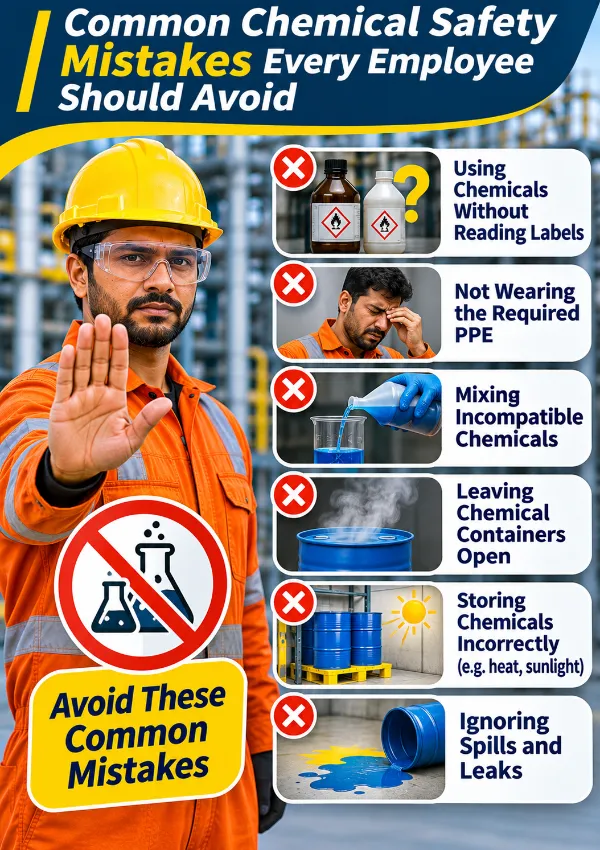
Every employee should avoid these common mistakes:
- Never handle an unidentified chemical.
- Never mix unknown chemicals or attempt to neutralise a spill without proper guidance and authorisation.
- Never store chemicals in unlabelled containers.
- Never ignore chemical warning symbols and hazard labels.
- Never use damaged or unsuitable PPE.
- Never eat, drink or smoke in designated chemical handling areas.
- Never ignore leaks or damaged containers.
- Never operate equipment without proper training and authorisation.
- Never block emergency exits, safety showers or eyewash stations.
- Never assume that a familiar chemical is harmless.
Following these precautions can reduce chemical exposure and prevent avoidable workplace incidents.
10. The Future of Chemical Safety: Continuous Learning and Digital Awareness
Industrial processes continue to change and organisations must improve their safety practices to manage new and existing risks. Digital learning solutions can make chemical safety information more accessible organised and easier to update.
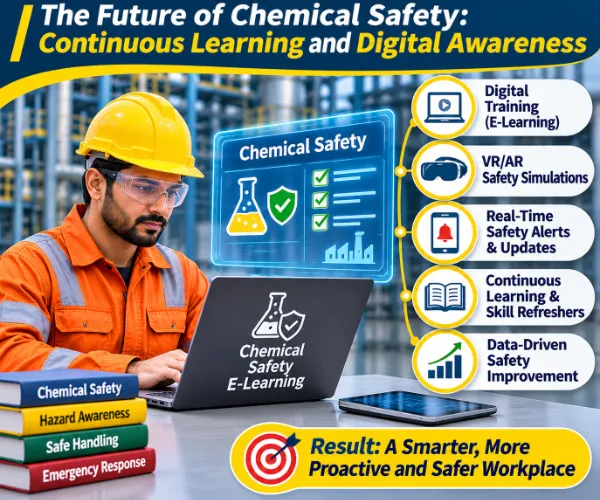
Digital EHS platforms can support organisations by helping them:
- Provide online chemical safety training.
- Share updated safety instructions and awareness materials.
- Maintain employee training records.
- Improve access to EHS knowledge resources.
- Distribute safety alerts and important updates.
- Support consistent communication across departments.
Platforms such as SheelPlatform can support organisations in managing Environment, Health, Safety, Risk and Compliance activities through a digital approach.
However, digital learning should complement practical demonstrations, workplace supervision and emergency drills rather than replace them.
Conclusion: People Make Chemical Safety Possible
Preventing industrial chemical disasters requires more than advanced technology, safety equipment and written procedures. It requires people who understand workplace hazards, recognise unsafe conditions, follow safety instructions and take responsibility for their actions.
Proper training and regular awareness programmes help employees identify chemical risks, follow safe handling practices, use protective equipment correctly and respond effectively during emergencies.
Organisations must make human behaviour an important part of their chemical safety management strategy. Regular training, effective communication, employee participation and continuous learning can help create a safer industrial environment.
Every safe decision matters. Every trained employee makes a difference. Every preventive action can protect a life.
Make Chemical Safety a Shared Responsibility
Build a workplace where safety awareness becomes a daily habit, not just a training requirement. Invest in knowledge, encourage responsible behaviour and empower every employee to contribute towards a safer industrial environment.
Stay Aware. Stay Trained. Stay Safe.